
That box of old Christmas decorations in your attic might be worth a lot more than sentimental value. Collectors are paying serious money for mid-century ornaments, lights, and figurines that most people tossed decades ago. Before you donate another box, read this.
Aluminum Christmas Trees That Defined an Era
Picture this: a silver tree spinning under a color wheel, casting red and blue light across a mid-century living room. Aluminum Christmas trees were the height of modern holiday style in the late 1950s and early 1960s. Then A Charlie Brown Christmas aired in 1965 and mocked them mercilessly. Sales collapsed almost overnight. Today, that cultural notoriety makes them hot collectibles, with complete sets — tree, stand, and color wheel — selling for $200 to $500.
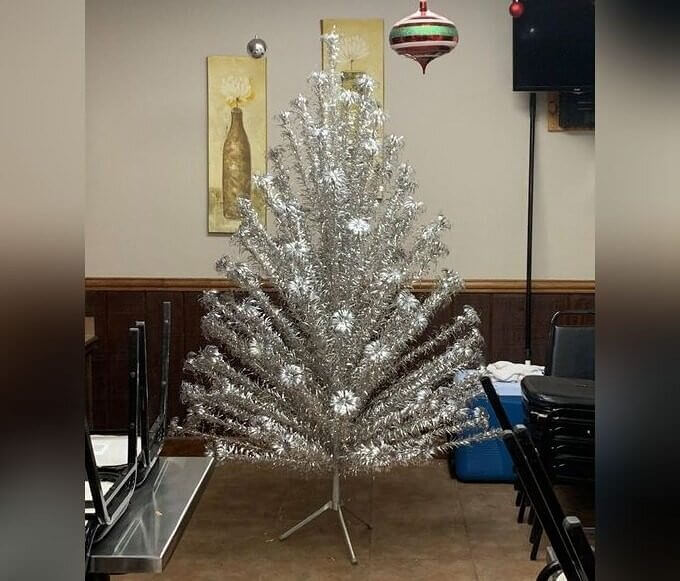
The Evergleam brand, made in Manitowoc, Wisconsin, is the most sought-after. Larger trees with more branches and the original color wheel motor intact are worth significantly more.
Old Ceramic Christmas Villages Worth Collecting
Department 56 gets the headlines, but older ceramic Christmas villages — particularly those made in Japan during the 1950s and 1960s — have quietly built their own collector following. These hand-painted ceramic buildings often came as part of train set accessories or were sold separately at dime stores. Individual pieces sell modestly, but complete matched village sets with original boxes and all accessories can bring $150–$350. The charming imperfection of hand-painting is exactly what collectors love about them.
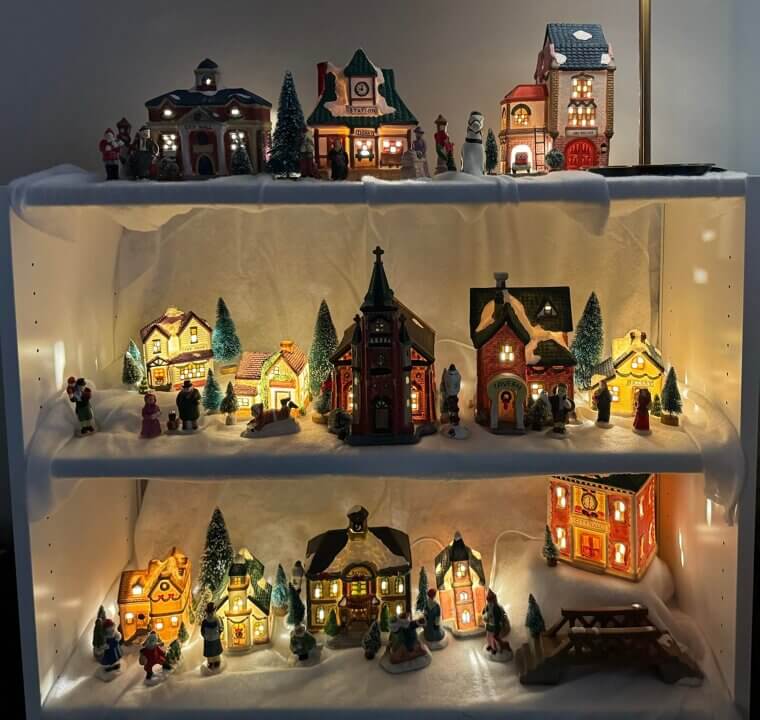
Look for villages with intact snow-flocked roofs and original light-up mechanisms that still work. Japanese-made ceramics from this era often show subtle glaze variations that make each piece slightly unique.
Vintage Glass Figural Ornaments in Rare Shapes
Would you pay $200 for a glass pickle? Collectors do, regularly. Figural glass ornaments — shaped like fruits, vegetables, animals, and even cartoon characters — were handblown in Germany and Czechoslovakia from the 1880s through the 1930s. Common shapes like balls and teardrops are worth a few dollars. But rare figures — a glass lobster, a zeppelin, a Black Pete face — can hit $500 to over $1,000 at specialty auctions. The stranger the shape, the higher the price.
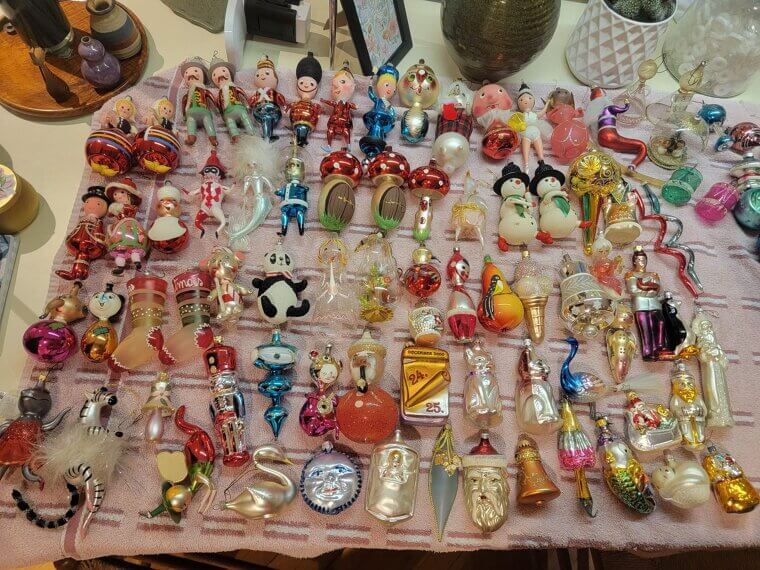
Genuine antique figural ornaments have slightly irregular shapes from hand-blowing and show age in their paint. Reproductions are common, so buy from reputable dealers who can verify provenance.
Bubble Lights That Mesmerized Every Child
Every kid who grew up in the 1950s remembers staring at bubble lights, watching the colored liquid mysteriously boil inside a tiny glass tube. The effect was mesmerizing — and slightly unnerving, since the fluid was methylene chloride, a chemical that's now tightly regulated. That's part of what makes vintage bubble lights collectible today. Working sets in original boxes sell for $50–$150, and rare colors like silver or unusual shapes push prices even higher.
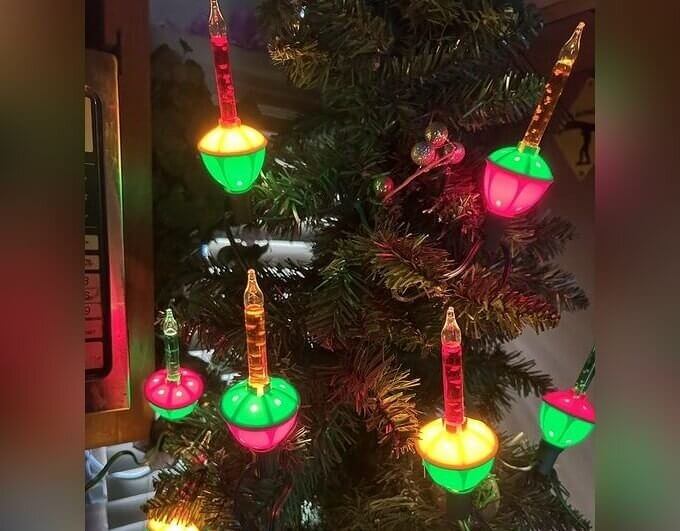
Non-working bubble lights can often be restored by gently warming the tube. Collectors prize complete sets of 7 or 10 lights with matching bases and the original NOMA or Paramount box.
Celluloid Santas Worth More Than You Think
Celluloid was the plastic of its time — lightweight, moldable, and wildly flammable. Santa figurines made from celluloid in the 1920s through the 1940s have a distinctive translucent glow that modern plastics simply can't replicate. Most were made in Japan and imported in enormous quantities. Yet survival rates are low, partly because of fire risk and partly because families discarded them. A well-preserved celluloid Santa in original paint can sell for $75–$300 depending on size and detail.
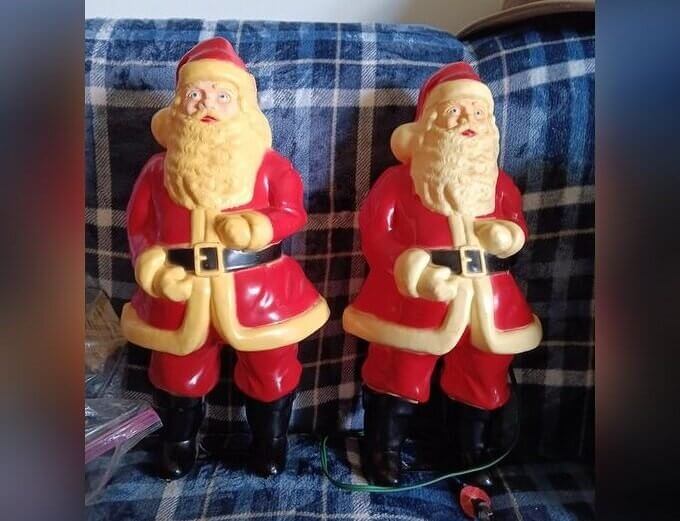
Handle celluloid pieces carefully — they're fragile and can crack with age. Japanese-made examples often carry a 'Made in Occupied Japan' stamp, which adds collector interest and value.
Bradford Plastic Ornaments from the 1960s
Not every valuable ornament is made of glass. Bradford Novelty Company produced plastic ornaments in the 1960s that were considered disposable at the time — bright, cheerful, and cheap. Decades later, their retro color palettes and distinctive shapes have earned them a devoted following. Sets in original Bradford boxes are particularly desirable. Individual ornaments sell for $5–$20, but complete boxed sets in excellent condition can bring $80–$150 from collectors chasing that specific mid-century aesthetic.
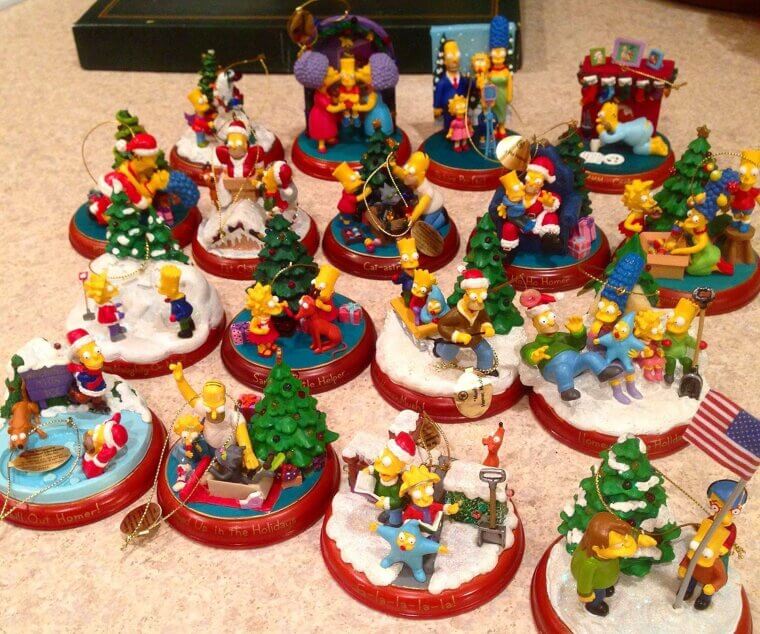
Bradford ornaments often feature a subtle pearlescent finish that distinguishes them from generic plastic ornaments of the era. Look for the Bradford name stamped on the box or on individual ornament hangers.
Shiny Brite Glass Ornaments from the 1950s
After World War II, American-made glass ornaments flooded the market as German imports dried up. Shiny Brite became the dominant brand, producing striped, stenciled, and solid-colored balls by the millions. The catch? Condition is everything. Ornaments with intact caps, unfaded paint, and original boxes can fetch $10–$50 each — and full boxed sets in pristine condition regularly sell for $150 or more at auction.
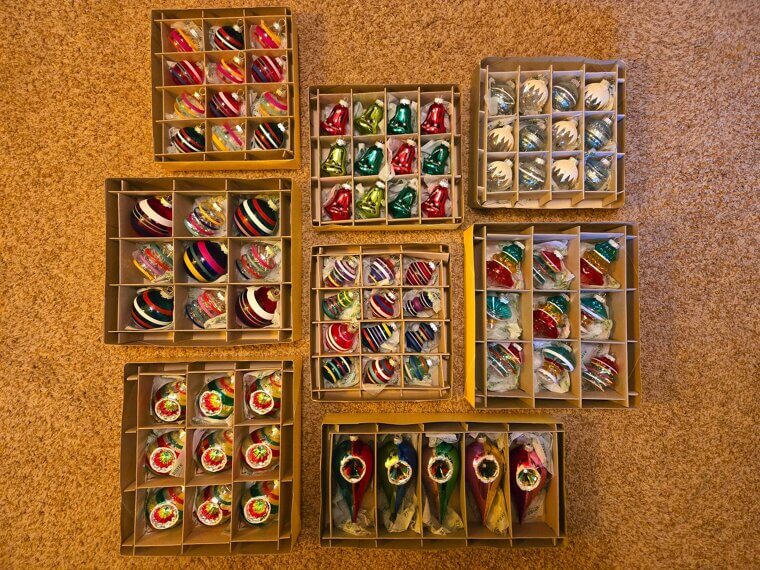
Look for the silver-foil cap and the 'Shiny Brite' stamp inside. Wartime versions made with cardboard caps instead of metal are especially rare and command premium prices from serious collectors.
Christmas Candy Containers Hiding Sweet Value
Here's where holiday collectibles get genuinely interesting. Christmas candy containers made from cardboard, glass, and tin — not just papier-mâché — were produced in enormous variety from the 1880s through the 1940s. Glass candy containers shaped like lanterns, boots, and snowmen are the most accessible entry point, selling for $30–$100. But rarer forms — unusual character faces, vehicles, or animals — are where real money hides. A rare figural glass or tin candy container in excellent condition can sell for $300–$800, sometimes more at specialty auctions.
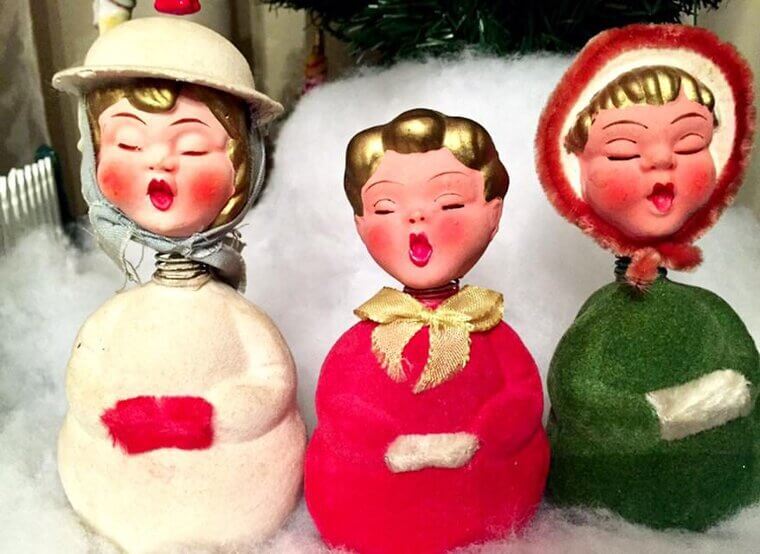
The hinge or closure mechanism that allowed the container to open is often the first thing to fail. Pieces with intact, functional hinges and original closures are worth considerably more than damaged examples — sometimes double the price of an otherwise identical broken piece.
Vintage Nativity Sets With Incredible Craftsmanship
The craftsmanship in antique nativity sets is genuinely stunning. German and Italian makers produced hand-painted figures in bisque porcelain, composition, and carved wood from the 1800s through the mid-20th century. Complete sets with all original figures, stable, and accessories are increasingly difficult to find — figures get lost, animals break, halos snap off. A complete Italian composition nativity from the 1930s–1940s with 12 or more figures in excellent condition can realistically sell for $400–$1,200.
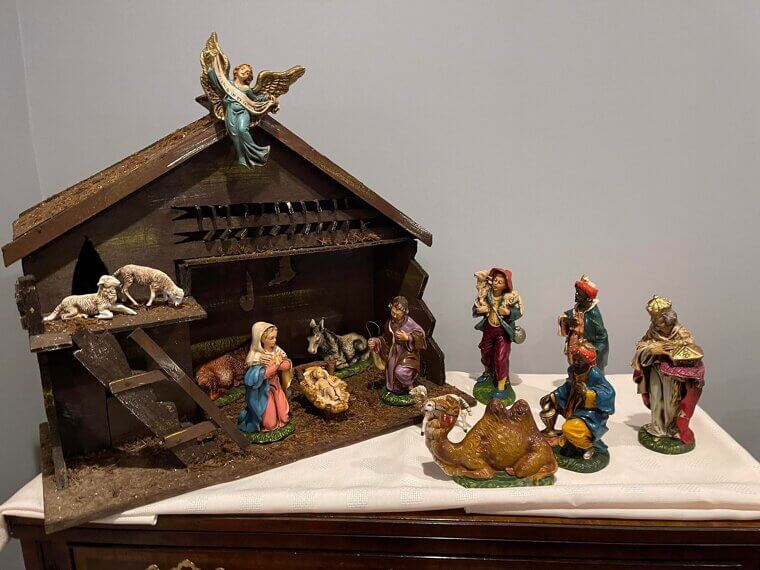
Neapolitan nativity figures from the 18th and 19th centuries are the gold standard — museum-quality pieces with original silk garments and terra cotta faces have sold for tens of thousands at major auction houses.
Antique Santa Figurines Made of Papier-Mâché
Santa Claus didn't always look the way Coca-Cola taught us he should. Papier-mâché Santa figurines from the late 1800s and early 1900s show a wilder range of Santas — some stern, some elongated, some dressed in brown or green robes. These were made in Germany and used as candy containers, with hollow bodies that opened at the waist. A good-condition antique papier-mâché Santa with original paint and no significant cracks sells for $150–$600. Museum-quality examples go higher.
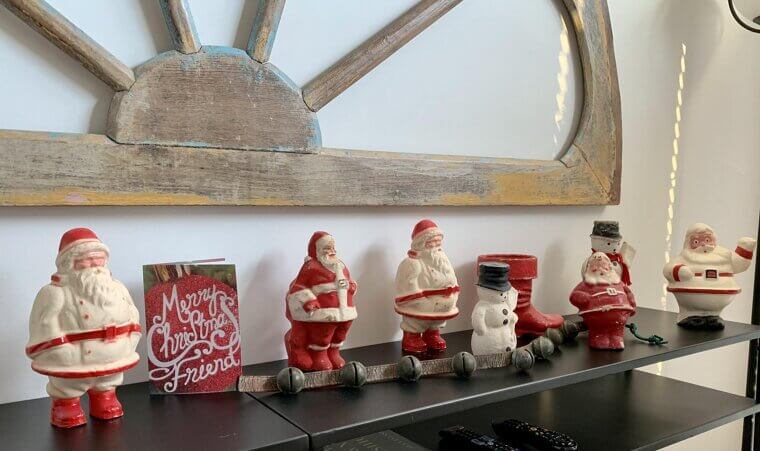
The paint on genuine antique papier-mâché Santas shows natural crazing and wear patterns consistent with age. Reproductions tend to have uniformly smooth surfaces and artificially distressed paint.
Antique Christmas Postcards Collectors Seek Out
Before social media, before Christmas cards, there were postcards — and the Edwardian era produced some of the most elaborate holiday postcards ever printed. German chromolithograph Christmas postcards from 1900–1915 feature stunning color work, embossing, and gold foil details that modern printing still can't fully replicate. Common examples sell for $5–$20. But postcards with unusual imagery — Santas in airships, mechanical Christmas scenes, or rare artist signatures — regularly sell for $50–$200 each.
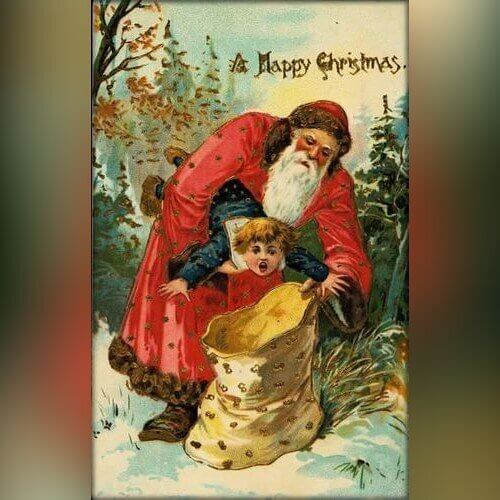
Postally used cards with legible period postmarks and messages are often more valuable than unused examples. The human story they carry adds collectible interest beyond the visual design alone.
Vintage Elves and Pixies Once Found Everywhere
You've probably walked past one without knowing — those small felt or plastic elves and pixies that used to sit on every mantle and shelf through the 1950s and 1960s. Made primarily in Japan, they came in dozens of poses and outfits. Individually, they're modest sellers at $10–$30. But here's the twist: large collections of matched elves in original condition, or rare oversized examples, attract serious buyers. A 12-inch Japanese felt elf in excellent condition with original tag can fetch $75–$150.
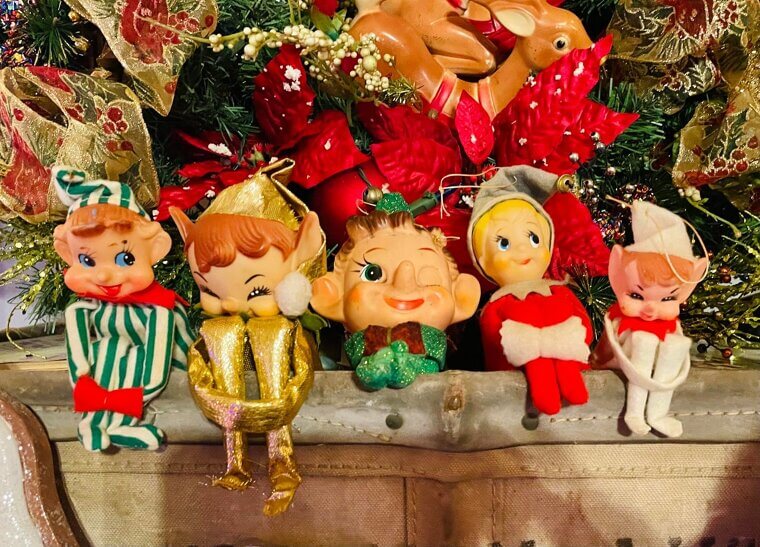
The felt versions are more valuable than plastic, and original paper tags dramatically increase prices. Elves with movable wire armatures inside that still hold poses are especially desirable to collectors.
Mica-Coated Ornaments That Shimmer With History
Mica-coated ornaments have a quality that photographs never quite capture — a warm, glittering shimmer that comes from real ground mica applied to cardboard or glass forms. Produced primarily in Germany and Czechoslovakia from the 1890s through the 1930s, these ornaments were made in shapes ranging from simple geometric forms to elaborate houses, stars, and figural scenes. Condition is critical since mica flakes off easily. A well-preserved mica house ornament can sell for $40–$150, with rare shapes going higher.
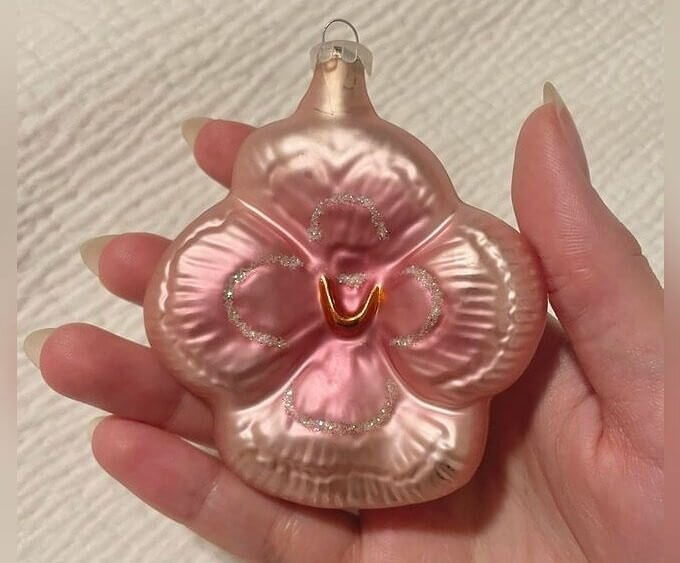
Mica ornaments were often made with cardboard interiors and thin glass or foil exteriors. The mica coating should look naturally aged — uniform, overly bright mica is a sign of reproduction or restoration.
Department 56 Villages Now Prized by Collectors
Forget grandma's dime-store village — Department 56 turned ceramic Christmas buildings into a full-blown investment category. The company launched its Snow Village line in 1976 and retired pieces annually, creating instant scarcity. Early Snow Village pieces from the late 1970s in mint condition with original boxes are the most valuable. Rare retired buildings regularly sell for $500 each on the secondary market, and the first six Snow Village pieces from 1976–1979 are considered the holy grail of the entire line.
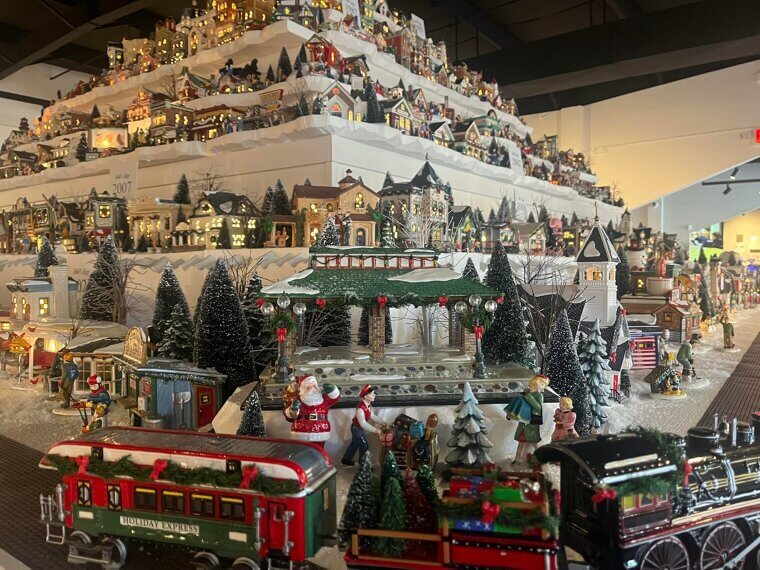
The original six Snow Village pieces — Mountain Lodge, Gabled Cottage, The Inn, Country Church, Steepled Church, and Small Chalet — in mint condition with boxes have sold for $800–$1,200 as a complete set. If you have any of these in a closet, check the bottom for the year stamp before you do anything else.
NOMA Electric Candle Lights From Decades Past
NOMA Electric Company was the largest Christmas light manufacturer in the world for much of the 20th century. Their electric candle lights — individual bulbs in painted glass or plastic candle-shaped housings — became a holiday staple from the 1930s through the 1960s. Complete working sets with original boxes are the target for collectors. A boxed set of NOMA candle lights in excellent working condition sells for $40–$100. Rarer NOMA products, like their 'Bubble-Lites' sets with original packaging, push into the $150–$250 range.
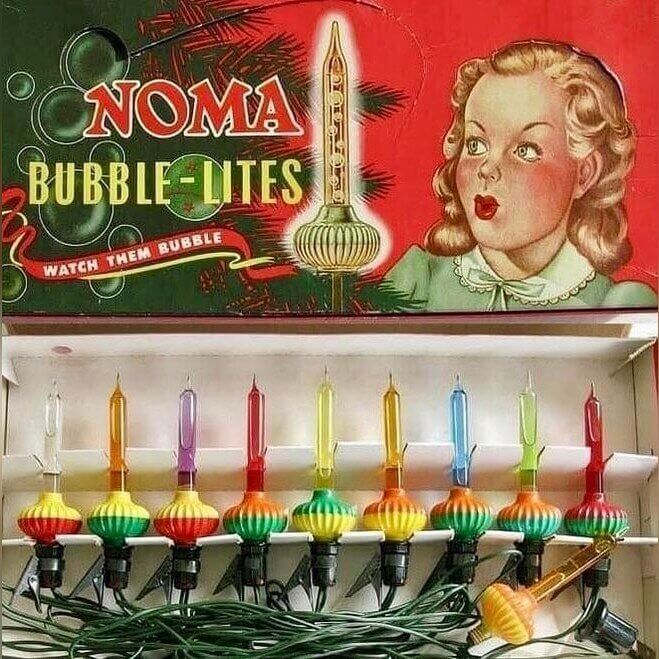
NOMA went bankrupt in 1965, making pre-bankruptcy sets with original NOMA branding more collectible than later licensed products. Sets with the original instruction sheet inside the box are especially prized.
Old Cardboard Santas That Survived the Years
Most cardboard Santas got thrown away. That's exactly why the ones that survived are worth finding. Die-cut cardboard Santas — the flat or slightly dimensional figures used as decorations, store displays, and greeting card inserts from the 1890s through the 1940s — were considered disposable. Large die-cut Santas originally used as store displays, sometimes 24 inches or taller, are the most valuable. A large antique die-cut cardboard Santa in excellent condition with vivid color and no significant tears can sell for $100–$400.
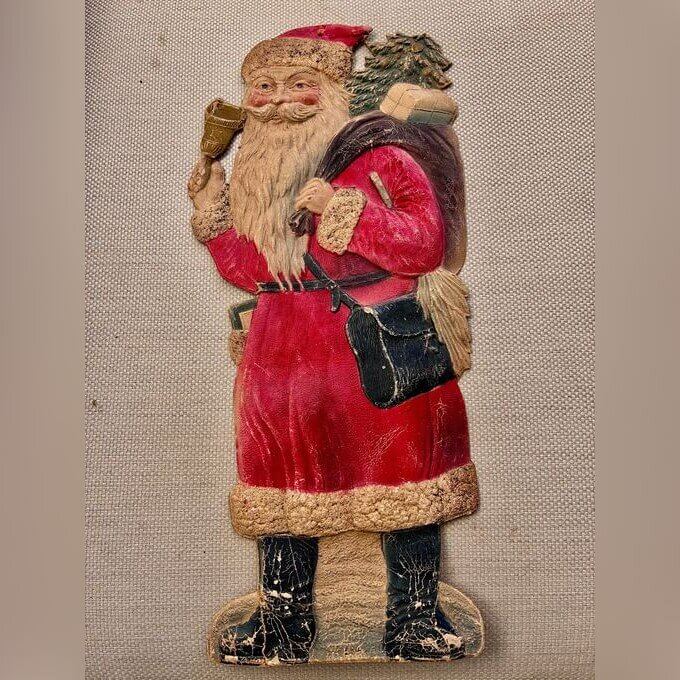
German-made die-cut cardboard decorations are generally more detailed and valuable than American examples. Look for embossed detail work and chromolithographic printing, which indicates pre-1920s German manufacture.
Antique Christmas Stockings Stitched With Care
Hand-stitched Christmas stockings from the late 1800s and early 1900s tell you something about who made them — the uneven stitches, the personalized embroidery, the fabric choices that reflect what was available at the time. These aren't factory products; they're folk art. A well-preserved antique hand-stitched stocking with original embroidery, no significant staining, and identifiable period fabric can sell for $75–$250. Stockings with family names or dates embroidered into them carry additional historical interest that some collectors specifically seek.
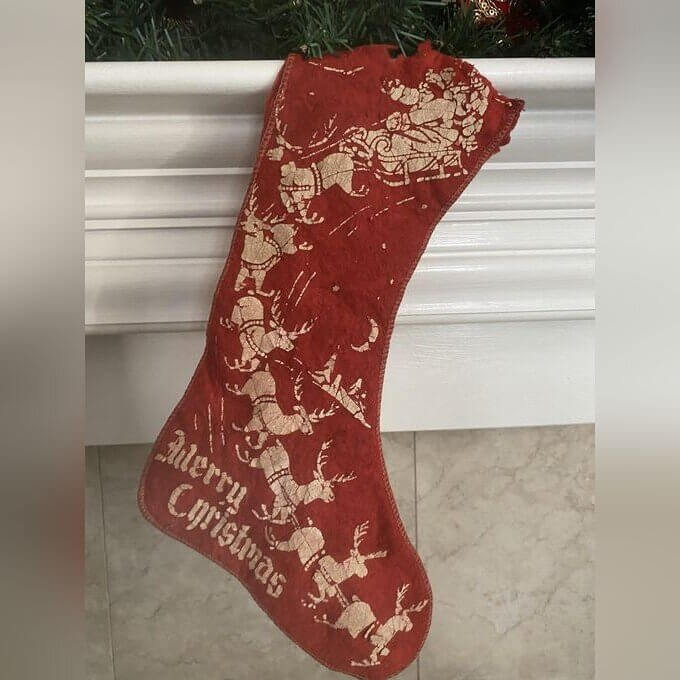
Commercially made antique stockings from the same era — printed cotton or felt with lithographed Santa scenes — are more common but still collectible, typically selling for $30–$100 depending on graphic quality and condition.
Antique Tree Toppers With Serious Collector Appeal
The tree topper is the most visible ornament on the tree — which is probably why so many antique examples were replaced when they got damaged. Surviving antique tree toppers in excellent condition are genuinely scarce. German glass star and angel toppers from the 1890s–1920s sell for $100–$400. Spun glass angel toppers with original wire halos and fabric clothing can bring $200–$500. But the most dramatic prices come from large figural wax or composition angel toppers with original painted faces — museum-quality examples have sold for over $1,000.

Electric tree toppers from the 1940s–1960s — particularly the rotating 'Star of Bethlehem' types with original motors and color lenses — sell for $75–$200 in working condition with original boxes.
Vintage Christmas Lights in Novelty Shapes
Forget plain glass bulbs — the novelty Christmas lights of the 1920s through 1950s were tiny works of art. Figural bulbs shaped like Santas, snowmen, lanterns, parrots, and even comic strip characters were produced in Japan and Italy in staggering variety. A single figural bulb in a common shape sells for $5–$25. But rarer figures — a Felix the Cat bulb, a Mickey Mouse, or a Dick Tracy character — can sell for $100–$300 each. Complete original strings with matching novelty bulbs are worth serious money.
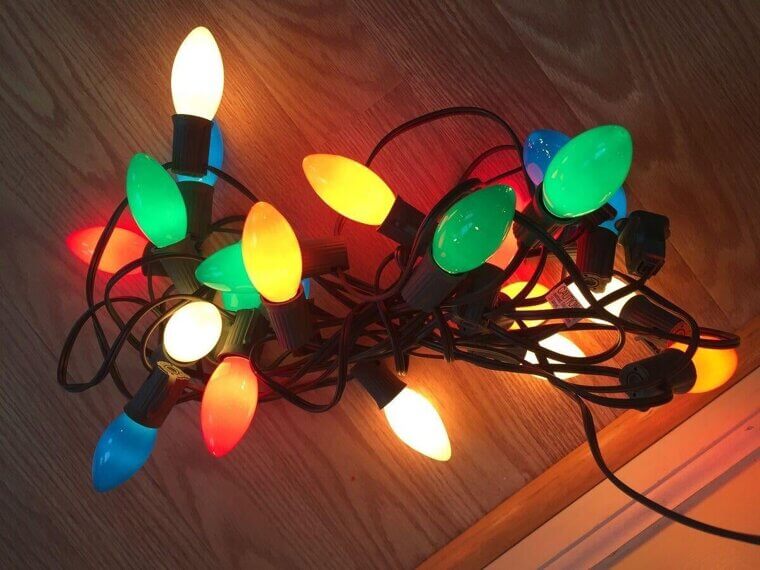
The painted decoration on figural bulbs chips easily, so condition is critical. Bulbs with vivid, complete paint and no chips command significant premiums — sometimes 3–4 times the value of a chipped example.
Vintage Wrapping Paper Rolls With Retro Designs
This might be the most underrated Christmas collectible category of all. Vintage wrapping paper — still rolled or folded, with intact graphics from the 1940s through the 1970s — has developed a passionate collector base that most people don't know exists. Unused rolls with retro Santas, mid-century geometric patterns, or licensed character designs sell for $20–$60 each. Sealed packages of multiple rolls with original price tags attached are the real finds, sometimes bringing $100–$200 for especially graphic or rare designs.
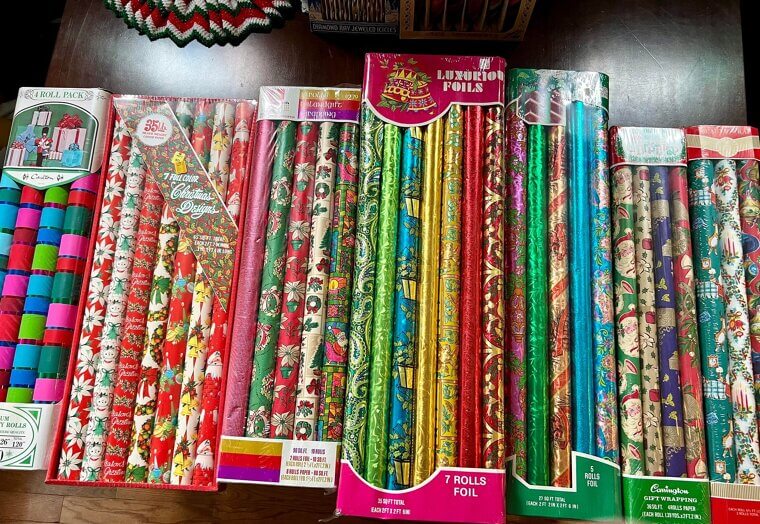
The condition of the paper edges matters enormously. Rolls with no yellowing, no tears, and vivid original color are increasingly difficult to find and command the highest prices from interior designers and collectors alike.
Spun Cotton Ornaments Made by Skilled Artisans
Spun cotton ornaments occupy a strange and wonderful corner of Christmas collecting. Made primarily in Germany from the 1880s through the 1930s, these figures — Santas, snowmen, fruits, vegetables, animals — were formed from tightly wound cotton batting shaped over wire armatures or molds. The technique produces figures with a soft, slightly fuzzy texture unlike anything made today. Simple fruit shapes sell for $20–$60. Figural Santas and animals in excellent condition with original paint and wire hangers regularly sell for $100–$400.
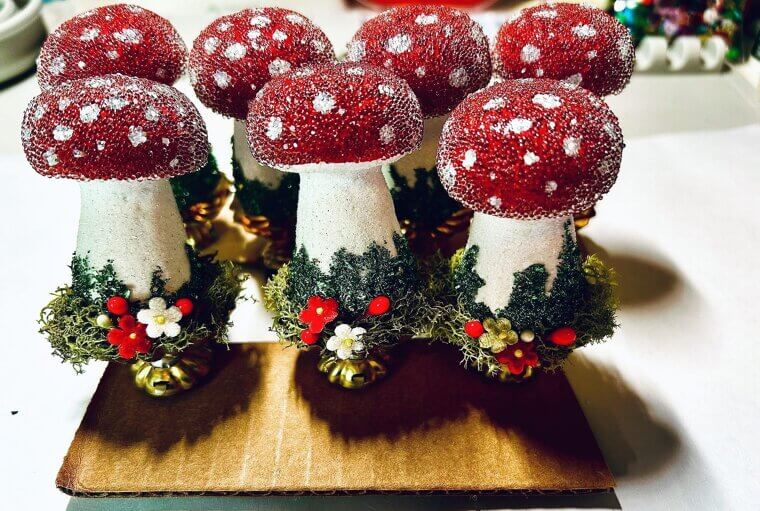
Spun cotton figures are extremely fragile — the cotton compresses and discolors with age, and paint flakes easily. Pieces with firm, well-preserved cotton and bright original paint are genuinely rare and worth significantly more.
Vintage Hallmark Keepsake Ornaments Now Valuable
Hallmark launched its Keepsake Ornament line in 1973 with just 18 ornaments. Nobody thought they were investing. The first-year ornaments — simple glass balls and yarn figures — now sell for $25–$75 each in excellent condition. But the real money is in specific limited editions and artist-signed pieces from the late 1970s and 1980s. The 1979 'Here Comes Santa' first edition in mint condition with original box has sold for over $200. Complete collections of first-edition series pieces are worth thousands.
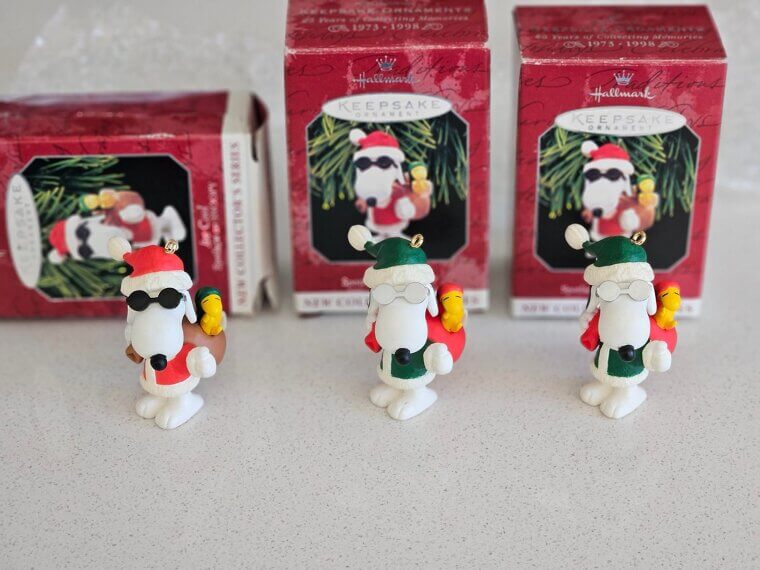
Hallmark ornaments without their original boxes lose 40–60% of their collector value. The box condition matters almost as much as the ornament itself — crushed corners and faded graphics significantly reduce prices.
Hand-Blown Kugel Balls From the Victorian Era
$1,500. For a glass ball. On a Christmas tree. Kugel ornaments — heavy, silvered glass balls and shapes produced in Germany from the 1840s through the early 1900s — are the most valuable mass-produced Christmas ornaments in existence. The name means 'ball' in German, and they were originally hung year-round for good luck. Standard silver balls in common sizes sell for $50–$200. But rare shapes — grapes, pine cones, ears of corn — in unusual colors like red, gold, or cobalt blue regularly exceed $500 and sometimes hit four figures.
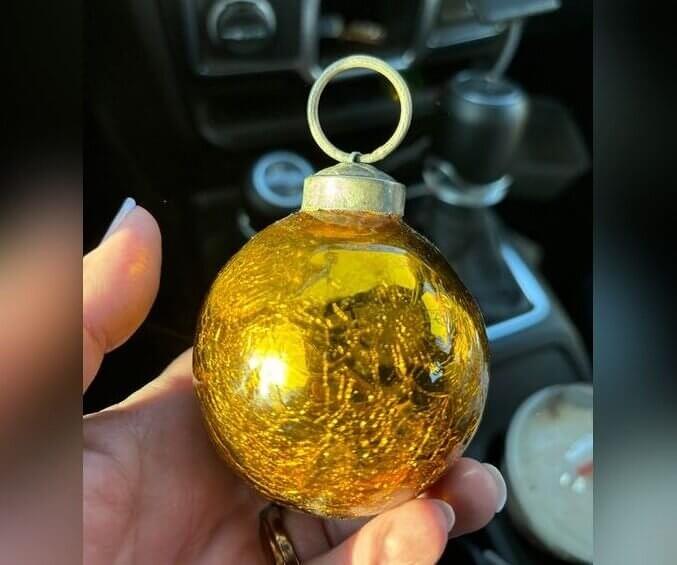
Authentic Kugels are noticeably heavy compared to later glass ornaments. The cap should be original brass or tin, and the interior silvering should show natural aging rather than the bright, even coating seen in reproductions.
Old Santa Cookie Jars Hiding Surprising Worth
Test the lid. If it's a vintage Santa cookie jar from the 1940s or 1950s, that simple action could be worth $300. American pottery companies — McCoy, Metlox, Brush, and others — produced Santa cookie jars that have become serious collectibles in both the cookie jar and Christmas categories. McCoy's Santa head jar from the late 1950s regularly sells for $150–$300. Metlox's 'Santa Claus' jar in excellent condition with no chips or repairs has sold for over $500. Lids are frequently damaged, so intact examples command strong premiums.
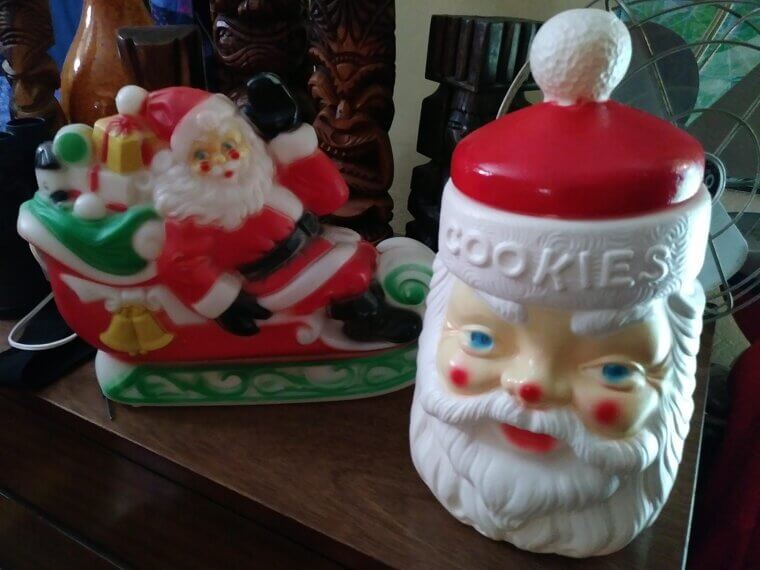
Reproductions of popular McCoy and Metlox cookie jars are common and sometimes deliberately mislabeled. Check the bottom for original pottery marks and look for the natural crazing in older glazes that reproductions rarely replicate convincingly.
Vintage Christmas Tins That Collectors Still Hunt
Fruitcake tins get mocked, but vintage Christmas tins are genuinely collectible — and the fruitcake companies know it. Tins from the 1930s through the 1960s featuring lithographed holiday scenes, especially those from specific regional bakeries or candy companies, have developed a strong collector following. A well-preserved tin with vivid lithography and no significant rust sells for $15–$50. But tins from specific beloved brands — Barricini, Fanny Farmer, or early Pepperidge Farm holiday tins — can bring $75–$150 from the right buyer.
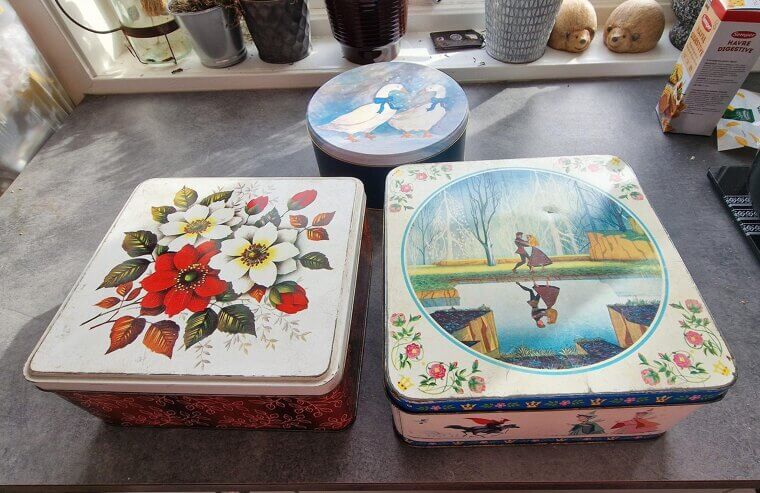
The lithography quality and subject matter matter most. Tins featuring detailed winter village scenes, classic Santas, or specific pop culture tie-ins from the era are more valuable than generic holly-and-bells designs.
Vintage Reindeer Figurines Made of Chenille
Chenille reindeer — those wire-armature figures wrapped in fuzzy chenille yarn — were a holiday staple from the 1940s through the 1960s. They came in every size from tiny ornament-scale figures to large mantle decorations. Individually, small chenille reindeer sell for $10–$30. But here's the fun part: complete sets of all eight named reindeer in matching condition, with original tags, become something collectors actively hunt. A complete matched set of large chenille reindeer in excellent condition can bring $150–$300.
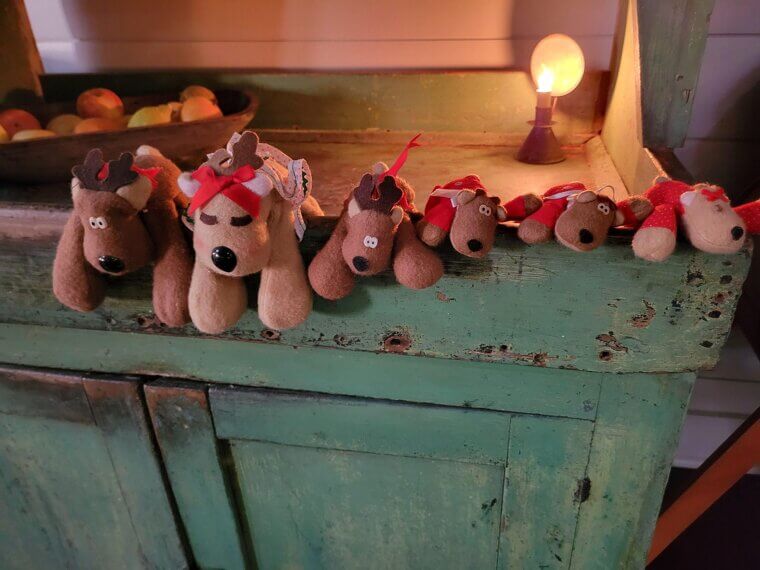
Chenille figures with original paper hang tags identifying the reindeer by name are significantly more valuable. The tags were usually the first thing removed, making tagged examples genuinely uncommon in the current market.
Old Advent Calendars That Are Now Treasures
Advent calendars have been around since the 19th century, but the golden age of collectible examples is the German cardboard calendar of the 1950s and 1960s. These featured intricate winter village scenes with 24 numbered windows hiding tiny images behind each door. Unused examples with all windows intact are extraordinarily rare — they were meant to be opened. A used but complete German advent calendar from the 1950s–1960s with vivid graphics and no missing windows sells for $50–$150. Unused examples with all windows sealed can bring $200–$400.
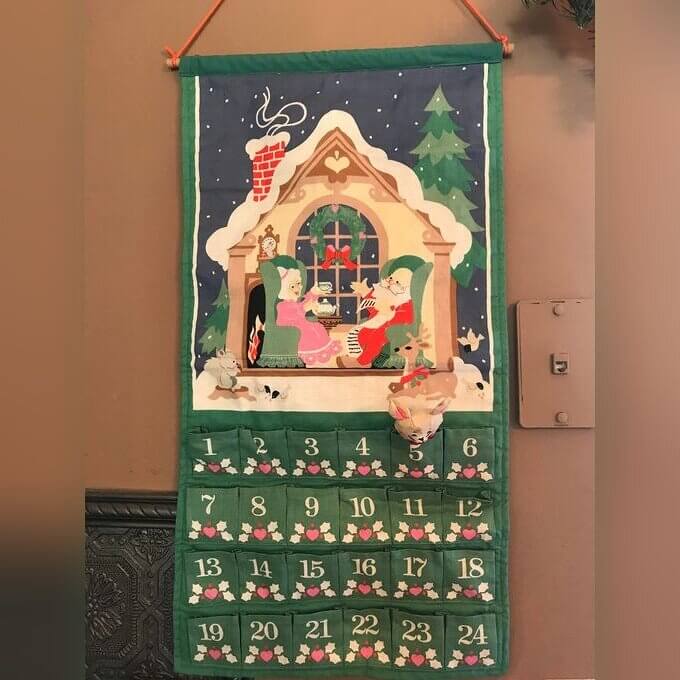
Pre-war German advent calendars from the 1920s–1930s are significantly rarer and more valuable, sometimes selling for $300–$600. The quality of the lithographic printing and the complexity of the scene directly affect collector prices.
Plastic Blow Mold Decorations From the 1960s
Blow mold plastic decorations — those glowing outdoor Santas, snowmen, and nativity figures made from vacuum-formed plastic — were the suburban lawn ornament of the 1960s and 1970s. Union Products of Leominster, Massachusetts made the most beloved versions. When Union Products closed in 2006, prices for their classic molds spiked immediately. A large Union Products blow mold Santa in excellent condition with original paint sells for $75–$200. Rarer figures — their Nativity set pieces, unusual animals, or oversized versions — can bring $300 or more.
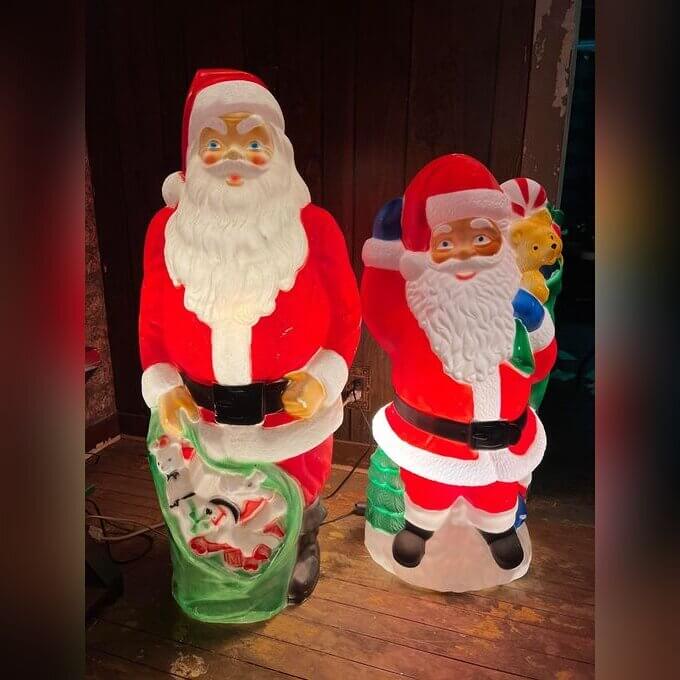
After Union Products closed, the original molds were acquired by other companies. Pieces marked 'Union Products' or 'General Foam' from the 1960s–1980s are the most collectible. Check the base for manufacturer stamps.
Vintage Christmas Record Albums Worth Keeping
Bing Crosby's 'White Christmas' album is the best-selling Christmas record of all time — but it's not particularly valuable to collectors. The real money is in specific pressings, promotional copies, and albums from artists who recorded limited holiday releases. A first pressing of Elvis Presley's 1957 'Elvis' Christmas Album' on the gold foil label in excellent condition sells for $200–$500. Rare promotional Christmas records sent to radio stations, never sold commercially, can bring $100–$400 depending on the artist and pressing.
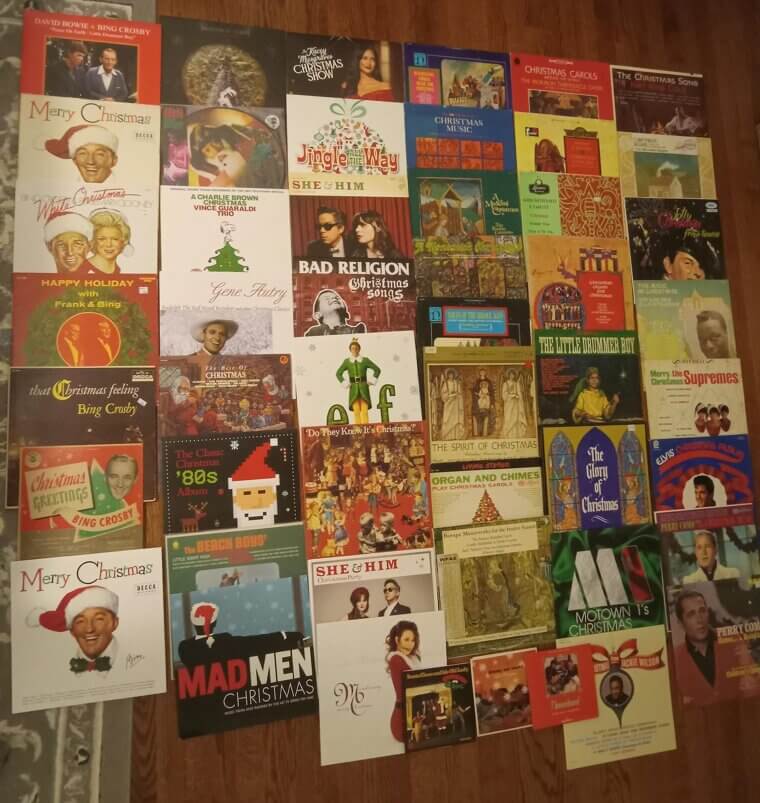
Condition grades in vinyl collecting are strict. A Christmas album graded VG+ with original inner sleeve and no writing on the cover is worth dramatically more than the same album in G condition with a torn sleeve.
Antique Candy Cane Decorations in Rare Condition
Antique candy cane decorations — not the candy itself, but decorative candy cane forms made from glass, celluloid, or papier-mâché — are surprisingly scarce in genuine antique condition. Glass candy cane ornaments from the early 20th century with original red and white striping and intact hooks sell for $30–$80 each. Rare oversized glass candy cane ornaments, sometimes used as tree toppers or window decorations, can bring $100–$200. The fragility of the striped glass means truly mint examples are genuinely hard to find.
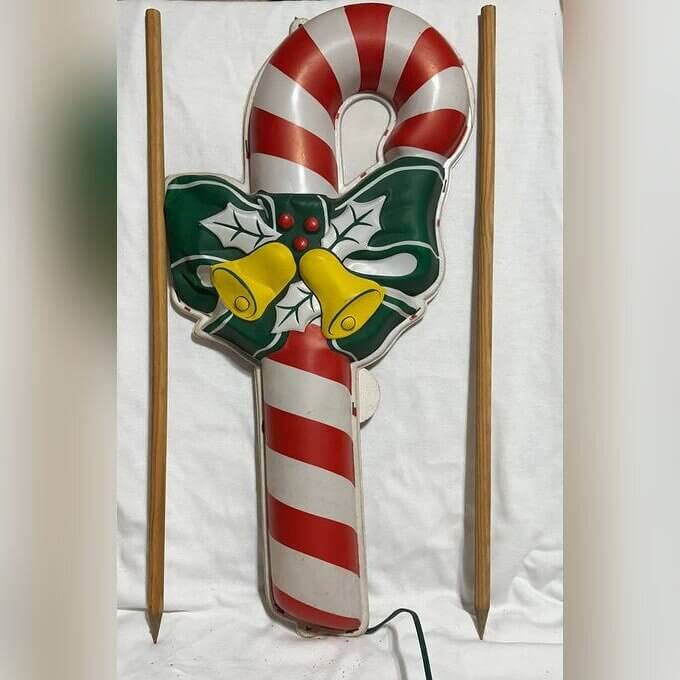
Celluloid candy cane figures from the 1920s–1940s, often featuring Santa or a child holding a candy cane, are more structurally stable than glass versions and sell for $40–$120 depending on size and paint condition.
Old Christmas Catalogs That Bring Back Memories
Nobody bought a Sears Christmas catalog planning to save it. That's what makes surviving examples so interesting — they're accidental time capsules. A 1950s Sears Wish Book in excellent condition with no torn pages, no filled-out order forms, and intact cover sells for $40–$100. Earlier examples from the 1930s and 1940s push higher, sometimes reaching $150–$250. But the real collector interest is in catalogs from specific years that featured landmark products — the first year of a famous toy, or a catalog featuring early TV-licensed merchandise.
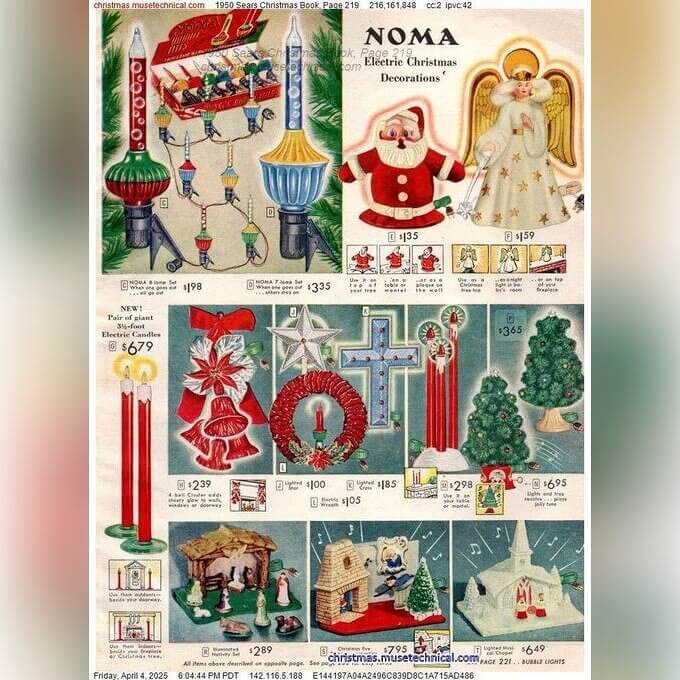
Montgomery Ward catalogs are generally less valuable than Sears equivalents from the same era, but specialty toy store catalogs — FAO Schwarz, Marshall Field's, or regional department stores — often bring premium prices for their rarity.
Vintage Snowmen Figurines Collectors Are Buying
Snowmen are the second-most-collected Christmas figure after Santa, which means the market is large but competitive. The sweet spot for value is mid-century American pottery snowmen — particularly those made by smaller regional potteries that produced limited quantities. A well-painted ceramic snowman from the 1950s with original sticker or mark sells for $30–$80. But figural snowman cookie jars, candy containers, and large display pieces in excellent condition can bring $100–$300. The Frosty the Snowman character specifically, with licensed markings, commands premiums.
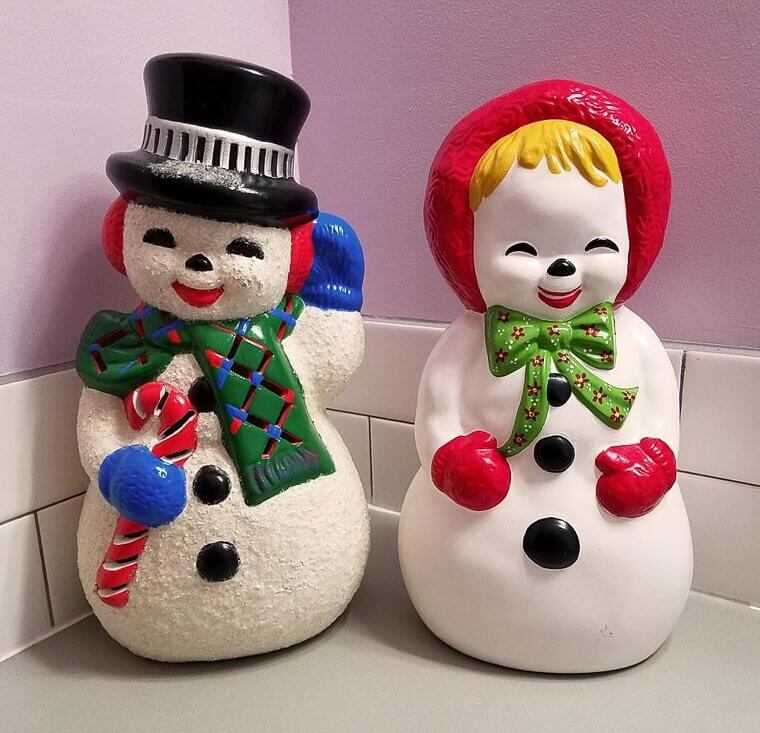
Japanese-made ceramic snowmen from the 1950s–1960s often feature exceptional hand-painting and are undervalued compared to American pottery equivalents. Look for the 'Made in Japan' or 'Occupied Japan' mark on the base.
Antique Wax Angels Found on Old German Trees
Wax angels were the original tree topper — delicate figures with real wax faces, fabric clothing, and spun glass wings, made in Germany from the mid-1800s through the early 1900s. The wax faces were cast in molds, hand-painted, and then dressed in silk or cotton garments with real hair. Survival rates are extremely low — wax cracks, faces discolor, and clothing deteriorates. A genuine antique wax angel in good condition with intact face paint and original clothing sells for $200–$600. Exceptional examples with original hair and wings exceed $1,000.
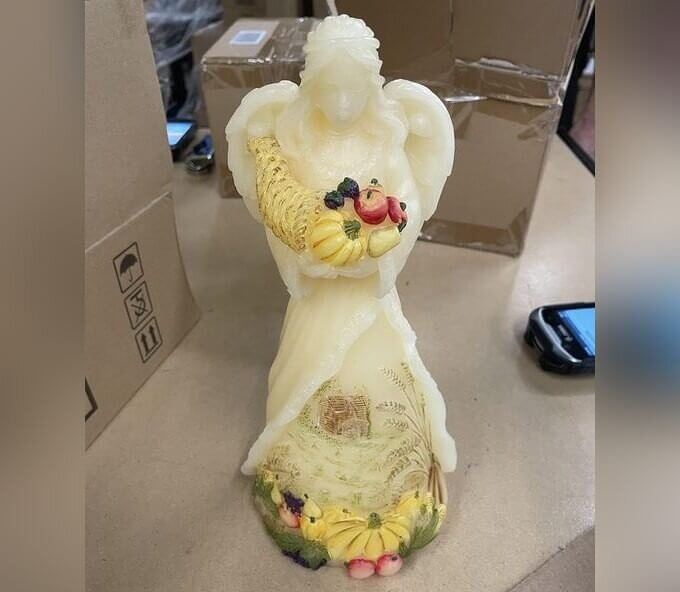
The wax used in antique German Christmas figures has a specific warm, slightly yellow tone that aged beeswax develops. Reproductions use modern paraffin that looks brighter and more uniform — a key authentication detail.
Vintage Tinsel and Lead Icicles Once Treasured
Here's a collectible with a dark history. Vintage tinsel and lead icicles — yes, actual lead — were the standard tree decoration from the early 1900s through the 1960s, when the FDA finally pressured manufacturers to switch to aluminum and mylar. Original lead icicles in sealed packages are now genuinely unusual items that collectors of Christmas ephemera actively seek. Sealed packages of original lead icicles sell for $20–$60. The irony of lead Christmas decorations being collectible is not lost on anyone in this hobby.
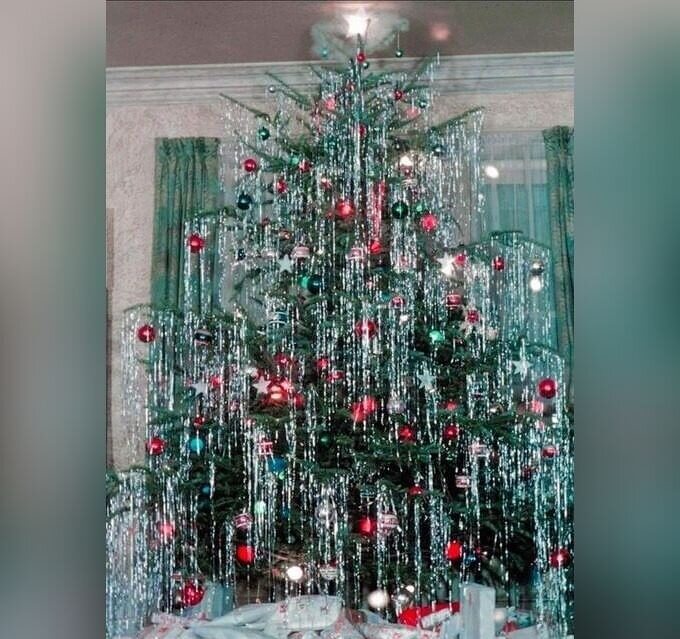
Handle original lead icicle packages with care and wash hands afterward — the lead content is real. Some collectors display sealed packages without opening them, treating them as historical artifacts rather than functional decorations.
Old Music Box Ornaments That Still Delight
A Christmas ornament that plays music when you wind it — that combination of function, nostalgia, and craftsmanship is exactly what drives collector prices. Vintage music box ornaments from the 1950s through the 1970s, particularly those made in Japan with Swiss movements, sell for $30–$100 in working condition. But here's where it gets interesting: ornaments with Swiss-made movements that play obscure or unusual carols rather than standard tunes are significantly more valuable. A working music box ornament playing 'Good King Wenceslas' can bring twice the price of one playing 'Jingle Bells.'
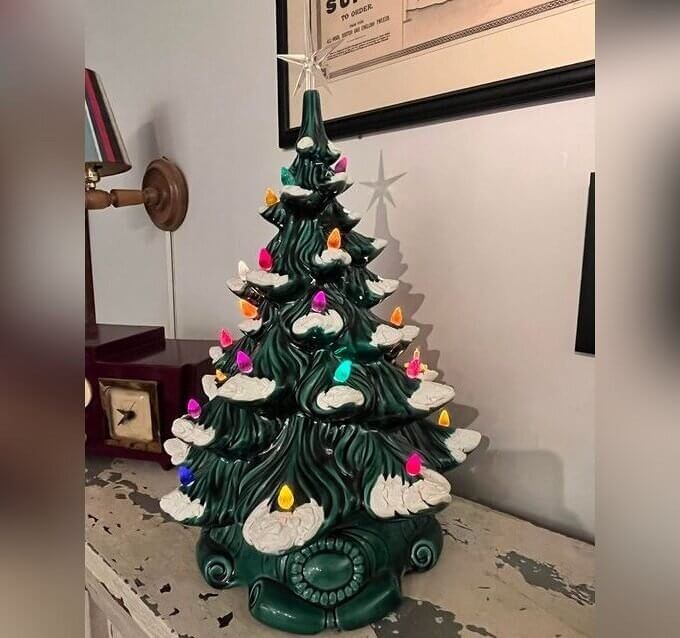
The movement condition is everything — a non-working music box ornament loses 60–70% of its value. Collectors test every piece before buying, and sellers who can demonstrate working function command strong premiums.
Vintage Christmas Pins and Brooches Worth Saving
Vintage Christmas jewelry — brooches, pins, and clip earrings with holiday themes — has exploded in collector interest over the past decade, driven partly by vintage fashion trends. Rhinestone Christmas tree brooches from the 1950s and 1960s are the most popular category, with simple examples selling for $20–$50 and elaborate multi-color rhinestone trees with working light-up mechanisms selling for $100–$300. Signed pieces from recognized costume jewelry makers — Weiss, Eisenberg, Hollycraft — command significant premiums over unsigned equivalents.
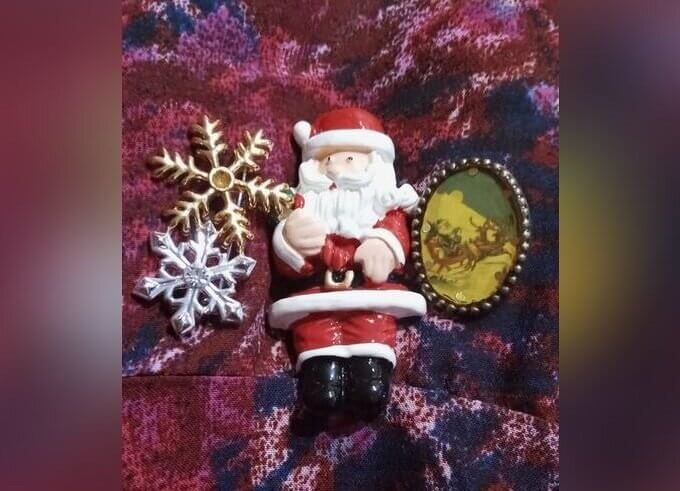
Hollycraft produced some of the most elaborate Christmas tree brooches of the 1950s, with pastel-colored stones in antiqued gold settings. A signed Hollycraft Christmas tree pin in excellent condition regularly sells for $150–$250 at jewelry auctions.
Hand-Painted Glass Ornaments From Eastern Europe
Polish and Czech hand-painted glass ornaments have been produced for over a century, but the pre-communist-era pieces from the 1920s through the 1940s represent a completely different level of craftsmanship. Artisans in the Lauscha region and the Bohemian glass centers produced ornaments with internal silver coating, hand-applied paint, and glitter work of extraordinary delicacy. Identified pieces from known workshops sell for $100–$500. But the market has exploded for entire collections of pre-war Eastern European ornaments — assembled collections of 50+ pieces have sold for $3,000–$8,000 at specialty auctions.
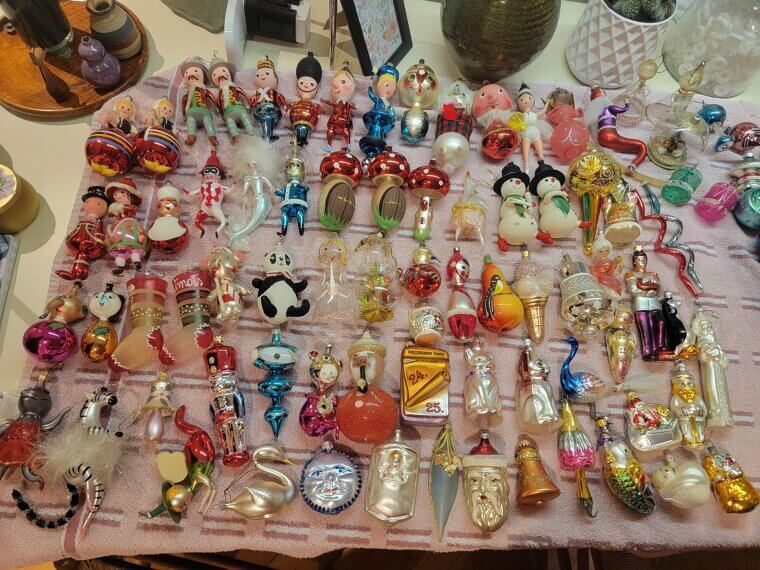
Post-war Polish ornaments from the 1950s–1970s are more affordable entry points into this category, typically selling for $15–$60 each. They share the hand-painted quality of earlier pieces but are significantly more available in the current market.
Antique Sleigh Decorations That Defined the Holiday
$12,000. That's what a fully restored antique Victorian sleigh with original painted decoration, intact upholstery, and provenance documentation sold for at a New England auction. Full-size antique sleighs have crossed from holiday decoration into serious antique furniture territory. But even smaller decorative sleighs — the kind used as mantle displays or store window props from the late 1800s — command serious prices. A painted wooden display sleigh from the 1890s–1910s in excellent original condition with painted Santa scenes sells for $800–$3,000. That box in your attic just got more interesting.
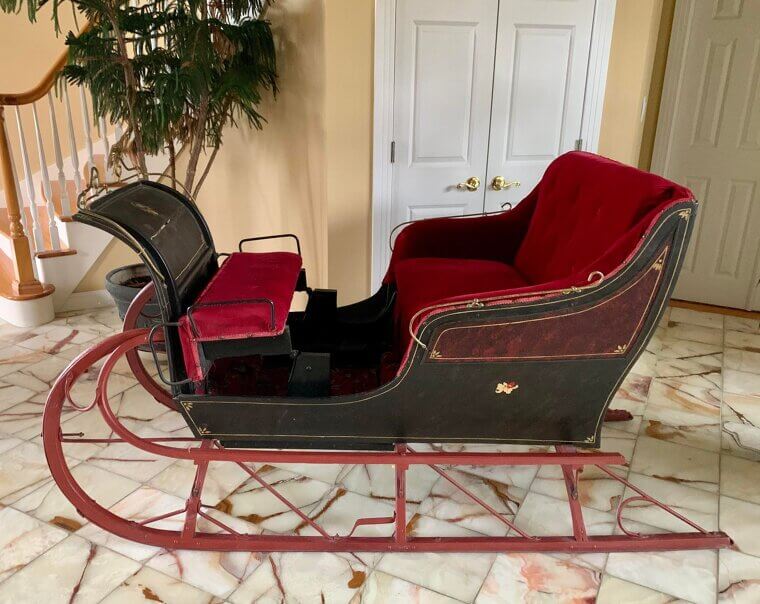
Miniature antique sleighs used as candy containers or ornament holders are more accessible, selling for $100–$500 depending on material and condition. Cast iron sleigh toys from the same era, particularly those by Hubley or Ives, regularly exceed $1,000 at toy auctions.