
Your grandmother's kitchen might be hiding a small fortune. Depression glass — those colorful dishes mass-produced during the 1930s — has quietly exploded in value, with some single pieces now selling for over $1,000. From cobalt blue butter dishes to tiny post-Prohibition whiskey glasses, here are 40 pieces that went from everyday tableware to genuine collector's treasure.
Royal Lace Cobalt Blue Butter Dish
When someone says "Depression glass," chances are you're picturing this exact piece — the Royal Lace cobalt blue butter dish by Hazel-Atlas Glass Company. That deep, rich blue with its intricate lace-inspired pattern is practically the poster child of the entire collecting world. Most people recognize it instantly. What they don't realize is just how valuable it's become. A single covered butter dish in this pattern now sells for $500 to $800 at auction.
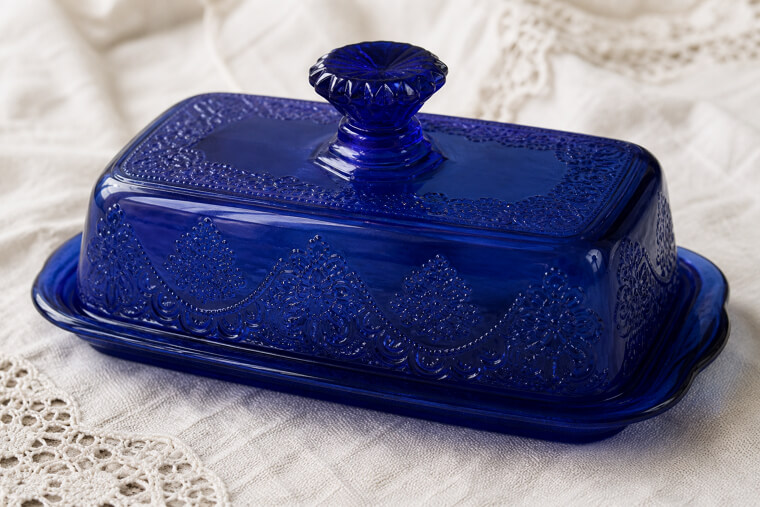
That makes it one of the most valuable mass-produced kitchen items to come out of the 1930s — a piece originally meant for everyday use, now treated like fine art. But cobalt blue isn't the only color commanding serious money. Wait until you see what Miss America pink is fetching.
Miss America Pink Pitcher Stuns Collectors
You've probably walked right past Hocking Glass Company's Miss America pattern at an antique show — that distinctive hobnail-sunburst design in soft pink is practically everywhere. Plates, cups, and saucers show up regularly and sell for modest prices, which is why so many collectors underestimate this line. But the 65-ounce pitcher is a completely different story. This single piece routinely sells for over $400, stunning people who assumed all Miss America pink was affordable.
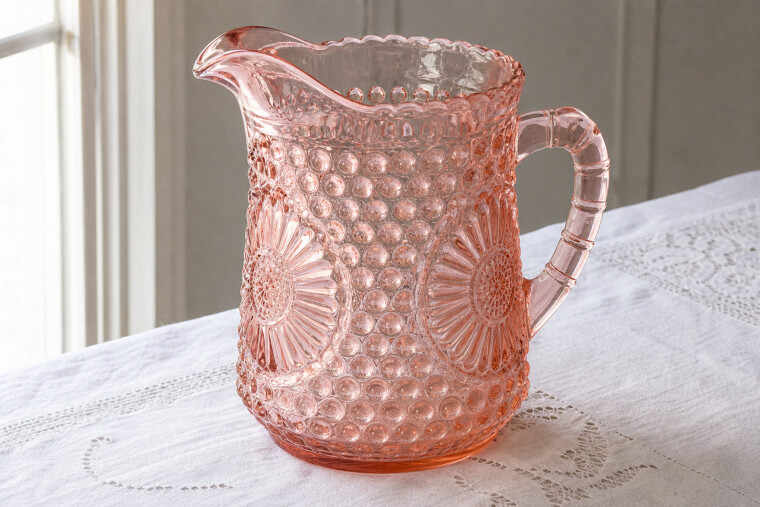
Countless families poured lemonade and iced tea from these pitchers every summer, never imagining they were using something that would one day fund a nice weekend getaway. Speaking of everyday pieces hiding extraordinary value — one particular green mug might be the biggest surprise yet.
Cherry Blossom Green Mug Is Rare
Most collectors know Jeannette Glass Company's Cherry Blossom pattern on sight — those delicate branches and blossoms show up on plates, bowls, and cups at nearly every antique show. Prices for common pieces are reasonable, usually $15 to $40, which gives people the impression that the whole pattern is modestly valued. The green mug shatters that assumption. Mugs simply weren't a standard production item in Cherry Blossom, making surviving examples genuinely scarce.
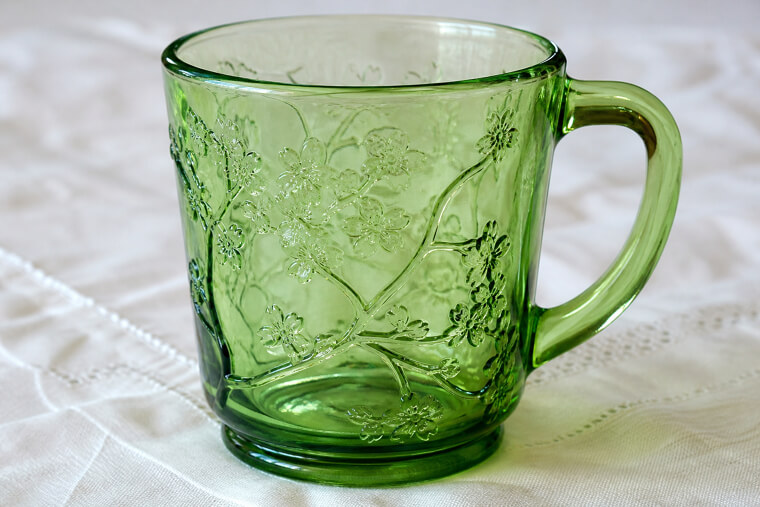
A single authenticated green mug can fetch $300 — a jaw-dropping number for a piece of everyday drinkware. It's proof that rarity within a familiar pattern is where the real money hides. And sometimes the real money is hiding inside a cookie jar.
Mayfair Blue Cookie Jar Brings Hundreds
Everyone's grandmother seemed to have one — the Mayfair "Open Rose" cookie jar by Hocking Glass, sitting proudly on the kitchen counter in that unforgettable ice blue. With its raised floral design and satisfying lid, it was the kind of piece that made even store-bought cookies feel special. Most families treated it as exactly what it was: a cookie jar. Nothing more.
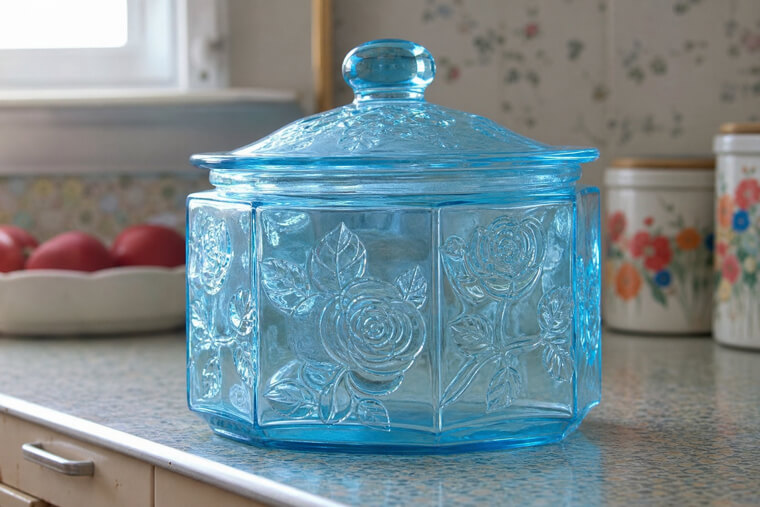
But today, that humble jar sells for $350 to $600. Some families have literally been reaching past a small fortune to grab a snickerdoodle. The ice blue color is the key — pink versions bring far less. Next up, a piece that was once given away free at the movies.
American Sweetheart Monax Dinner Plates Surprise
Here's your excuse to raid the kitchen cabinets tonight. MacBeth-Evans' American Sweetheart dinner plates in Monax — a translucent white that glows with an almost porcelain-like elegance — were literally handed out free at movie theaters during the Depression. Theaters used them as incentives to fill seats, meaning millions of families brought them home without spending a dime. That's exactly why so many survive in cupboards today, mistaken for ordinary white dishes.
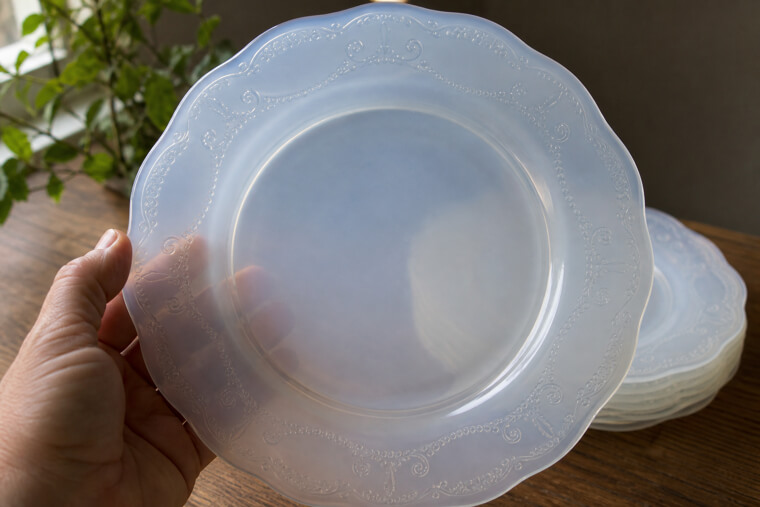
Hold one up to the light. If it glows with a faint bluish-white translucence and features a delicate scroll border, you might be looking at $25 to $40 per plate — and a full set is worth considerably more. But wait until you see what a tiny dancing figure on green glass can do to a price tag.
Cameo Green Cookie Jar Worth $400
Look closely at Hocking's Cameo pattern in green and you'll spot something most owners miss entirely — a tiny dancing figure, almost like a ballerina, camouflaged within the scrollwork. Thousands of families have used these pieces for decades without ever noticing her. The green cookie jar is where this hidden dancer commands serious money, regularly selling for $400 or more. But here's the twist: much of that value comes down to the lid.
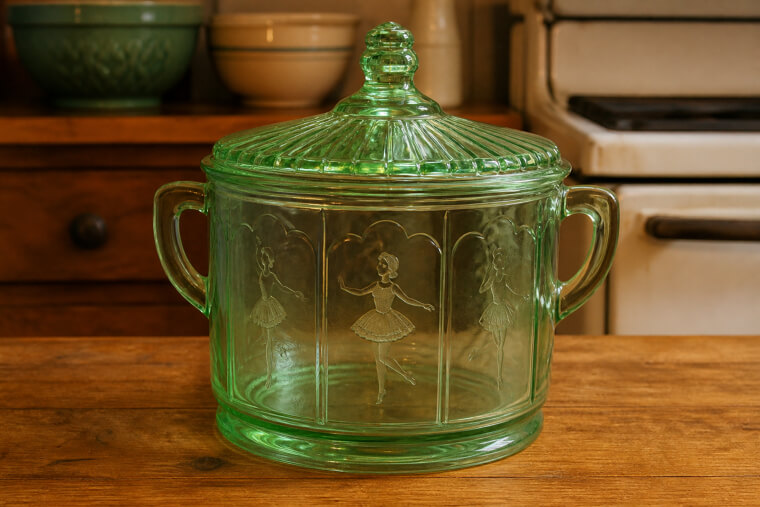
Cookie jar lids took a beating over ninety years of daily kitchen use. So many shattered that finding a jar with its original intact lid became the real challenge. No lid, no fortune. Speaking of rare variations hiding in plain sight, the next piece involves a mystery most collectors have never even heard of.
Princess Green Undivided Relish Dish Mystery
Here's something that trips up even experienced collectors: Hocking's Princess pattern in green included two versions of a relish dish — divided and undivided. Almost everyone knows about the divided one. The undivided version? Most people have no idea it exists. That obscurity is exactly what makes it extraordinary. Because so few collectors are actively searching for it, undivided Princess relish dishes occasionally surface at estate sales and flea markets completely unrecognized, priced at a few dollars alongside ordinary serving dishes.
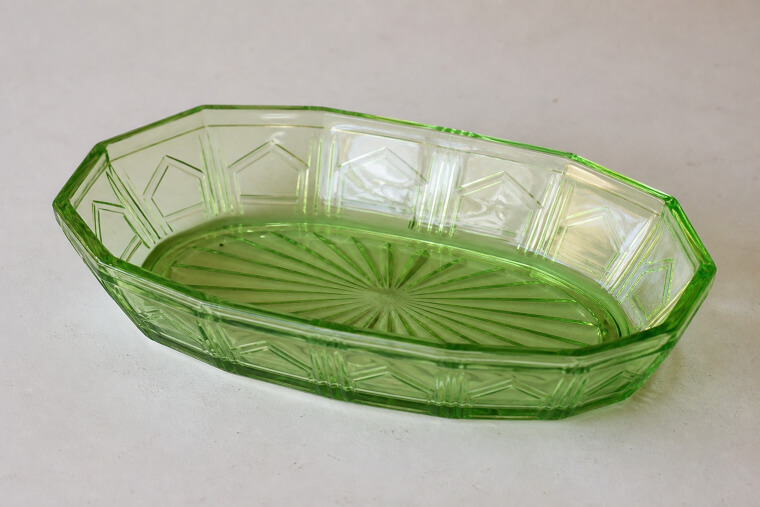
The actual value? North of $700. It's the kind of piece that could be sitting in someone's attic right now, wrapped in newspaper from 1955, waiting. And if rare variations excite you, the next item proves that a pair of overlooked candlesticks might be the smartest investment in Depression glass.
Adam Pink Candlestick Pairs Climb In Value
Seasoned collectors know something casual buyers don't: Jeannette Glass Company's Adam pattern candlesticks in pink are one of the smartest entry points in Depression glass right now. While everyone chases plates and bowls, these elegant four-inch candlesticks sit underpriced at $100 to $150 per matched pair. Dealers who track market trends say Adam candlesticks haven't caught up to other pieces in the same pattern, where butter dishes and covered casseroles already command premium prices.
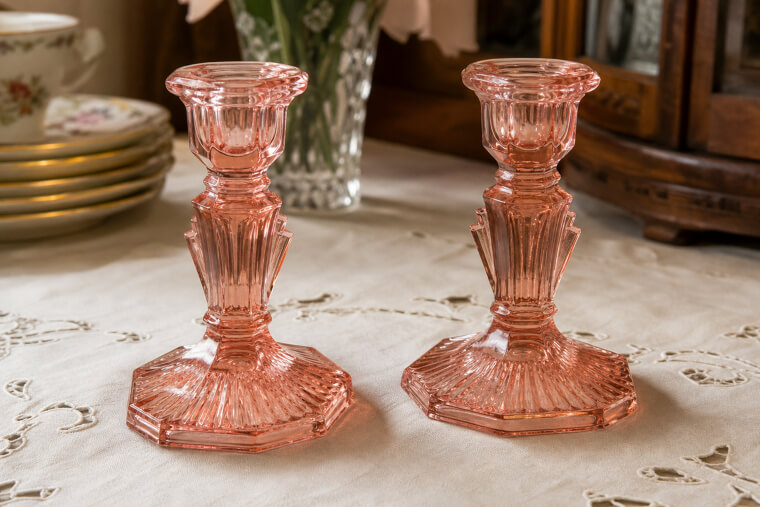
That gap won't last. As tabletop and mantel displays drive collector interest, decorative pieces like candlesticks are gaining fast. If you're building a collection on a budget, this is the insider move. Next up, a single word — "heavy" — makes the difference between a $60 pitcher and a $500 treasure.
Dogwood Pink Heavy Pitcher Is Gold
Same pattern. Same color. Same shape. But one Dogwood pink pitcher by MacBeth-Evans is worth eight times more than the other. The company produced two versions — a thin-walled pitcher and a thick "heavy" version. The thin one sells for around $60, perfectly respectable. The heavy version? It commands $500 or more. The difference is literally in your hands. Pick up the pitcher. Feel its weight. The heavy version is noticeably thicker, sturdier, with a more substantial presence.
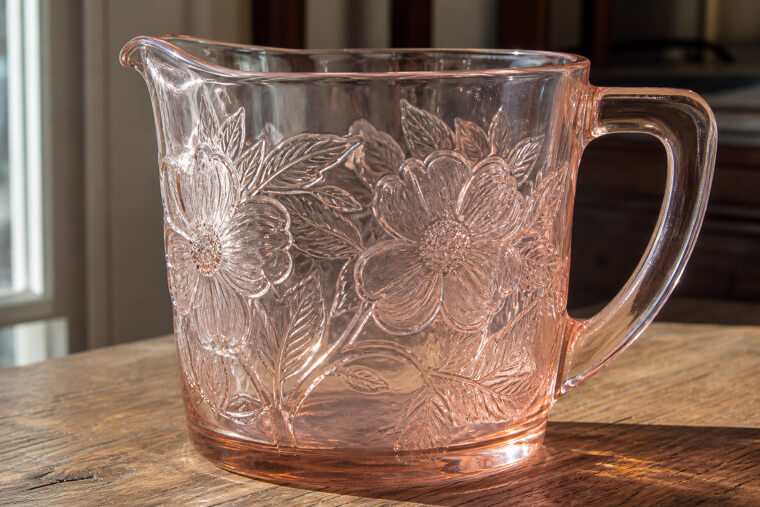
Most sellers at yard sales and flea markets have no idea there are two versions, which means they price both the same. That knowledge gap is your advantage. And speaking of patterns that reward careful identification, the next piece proves that even common amber glass hides an uncommon secret.
Sharon Amber Cheese Dish Tops $200
Here's your actionable tip: at estate sales, the Sharon "Cabbage Rose" covered cheese dish in amber often sits on the table mislabeled as a butter dish and priced accordingly. The difference matters enormously. Federal Glass Company's Sharon pattern is one of the most common Depression glass lines — amber plates and bowls show up everywhere for a few dollars each. But the covered cheese dish is a different animal entirely. It has a distinctive wide plate base with a domed lid, noticeably broader than a standard butter dish.
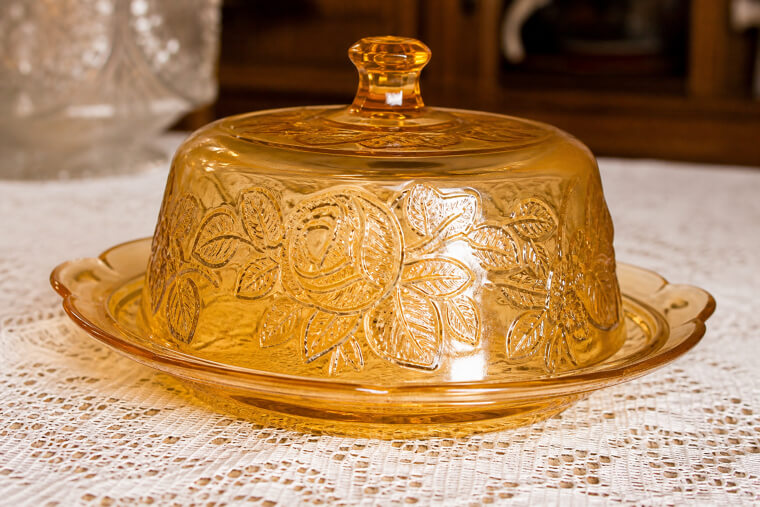
Genuine examples sell for $200 or more, yet sellers who don't specialize in Depression glass routinely tag them at $10 to $20. Look for the cabbage rose motif on the lid and the characteristic amber glow. This is a piece where knowing what you're looking at literally pays for the entire estate sale trip. Up next, two nearly identical Florentine patterns — and confusing them is a mistake that costs collectors real money.
Florentine No. 2 Green Cone Pitcher
Here's the insider trick that separates serious collectors from everyone else: Hazel-Atlas made two Florentine patterns that look nearly identical at first glance. The No. 2 cone-footed pitcher in green — with its elegant scrollwork and distinctive footed base — sells for $40 to $50. The No. 1 pitcher has a flat bottom and plainer panels. Dealers who know the difference buy No. 2 pitchers misidentified as No. 1 all the time, essentially picking up pieces at half their value.
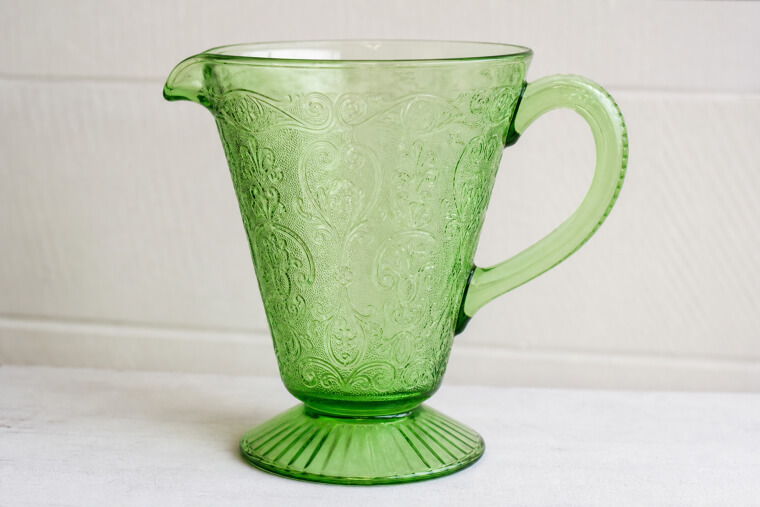
The quickest way to tell? Florentine No. 2 features smooth edges on its scallops, while No. 1 has serrated edges. Run your finger along the rim, and you'll know immediately. It's a small detail that separates a good find from a missed opportunity. Speaking of overlooked pieces, the next item is a sleeper that's quietly climbing faster than almost anything in green Depression glass.
Georgian Green Tumblers Are Sleeper Hits
Collectors in the know are quietly hoarding Georgian "Lovebirds" tumblers in green, and for good reason. Federal Glass produced these charming tumblers featuring paired lovebirds on alternating panels, and at $60 to $80 each, they're still affordable — but not for long. The insider secret? Tumblers were everyday workhorses. They got knocked off counters, dropped in sinks, clinked together in cupboards. Breakage rates were astronomical compared to plates and serving pieces that stayed safely in china cabinets.
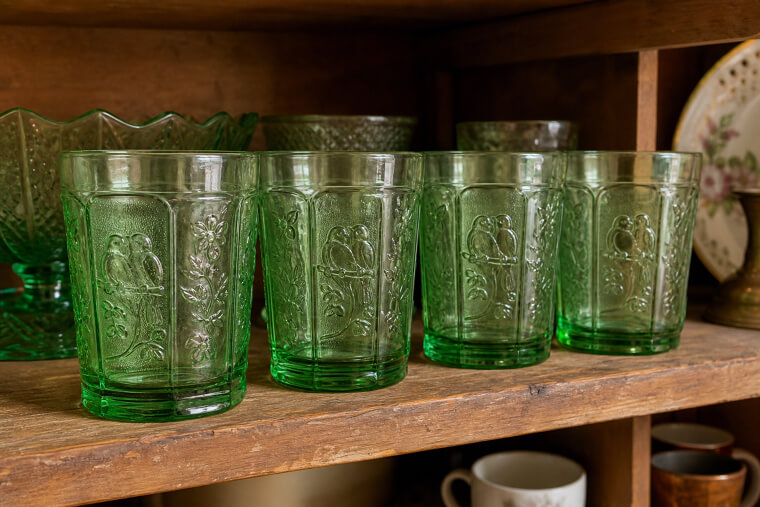
That means assembling a matched set of six or eight Georgian green tumblers is a genuine feat. Most experienced collectors have been hunting for years and are still one or two short. As scarcity drives prices upward, these sleepers are waking up fast. But they're nothing compared to what's coming next — an amber butter dish that has blown past the thousand-dollar mark.
Parrot Amber Butter Dish Flies Past $1,000
The Parrot amber butter dish by Federal Glass Company isn't just expensive — it's practically extinct. Confirmed sales have blown past $1,500, placing it among the most valuable pieces of Depression glass ever produced. Here's why so few survived: Federal only made the Parrot pattern, officially called Sylvan, for a short time before grinding down the molds and reworking them into the far more common Madrid pattern. That decision effectively erased Parrot from future production forever.
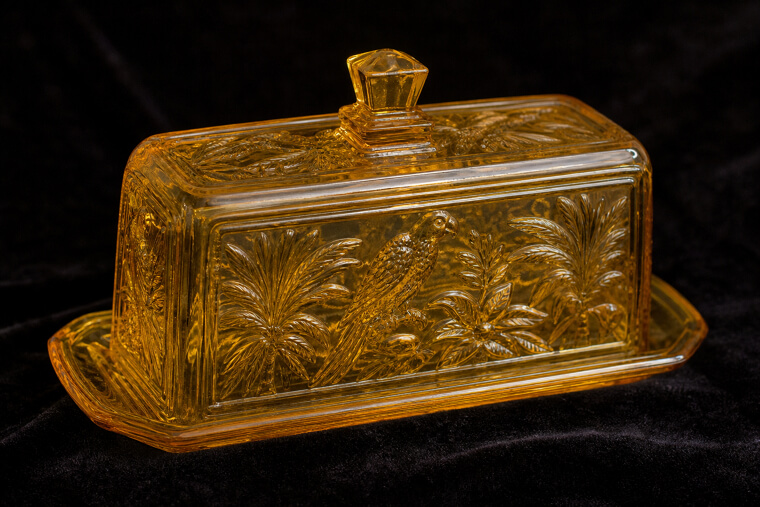
Every surviving butter dish is a piece that somehow escaped kitchens, moves, estate cleanouts, and decades of daily use. The amber color adds warmth that makes it instantly recognizable to anyone who knows what they're looking at. For most collectors, owning one remains a dream. Funny enough, the Madrid pattern that replaced it has its own collectible secrets — including a piece readers might actually own right now.
Madrid Amber Gravy Boat And Platter Set
That Madrid pattern Federal Glass created from those reworked Parrot molds? Check your Thanksgiving cupboard. The Madrid amber gravy boat and platter set is worth $150 or more, and countless families still use theirs every holiday without knowing. Look for the distinctive squared floral medallions surrounded by fine horizontal lines across the surface. The gravy boat sits on an attached underplate, making it unmistakable once you know the shape.
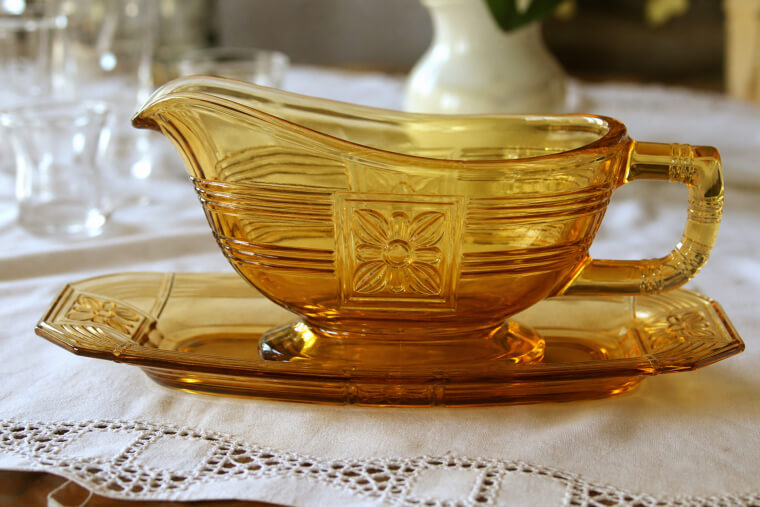
Here's the critical warning: in 1976, Federal reissued Madrid pieces for the Bicentennial in a slightly different amber shade called "Recollection." These reproductions are nearly worthless. Originals from the 1930s have sharper mold details and a richer golden tone. Up next, a candy jar with Art Deco lines that's attracting an entirely new generation of collectors.
Block Optic Green Candy Jar Charms Collectors
Here's something nobody predicted: a 1930s candy jar becoming a darling of Instagram-savvy interior designers. Hocking's Block Optic covered candy jar in green features bold, clean geometric lines that look like they were designed yesterday, not ninety years ago. At $60 to $80, it's genuinely affordable — and that's precisely why younger collectors are snapping them up. They're placing these jars on walnut credenzas, next to Eames chairs, on floating shelves beside succulents.
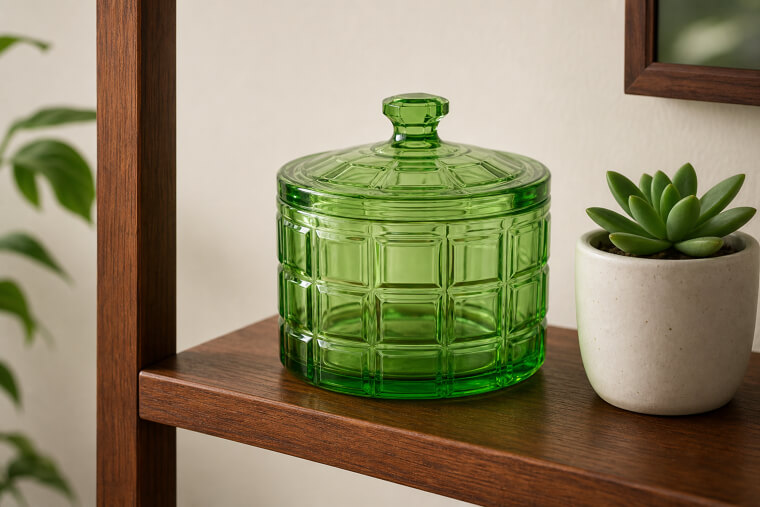
The Art Deco geometry of Block Optic pairs so naturally with mid-century modern furniture that new collectors don't even think of it as vintage — it just looks right. Demand is climbing as this crossover audience grows. Meanwhile, one of the most overlooked treasures in Depression glass is hiding in plain sight — because it's completely clear.
Columbia Crystal Butter Dish Hides In Kitchens
Here's your homework: go open your kitchen cupboards right now. Federal Glass's Columbia pattern butter dish in crystal is one of the most commonly overlooked Depression glass treasures because it's clear. No pretty pink, no cobalt blue — just transparent glass that blends in with everything else. Most people walk right past it. But flip it over and look for the telltale sunburst pattern radiating from the center, with those distinctive jewel-like raised dots around the edges.
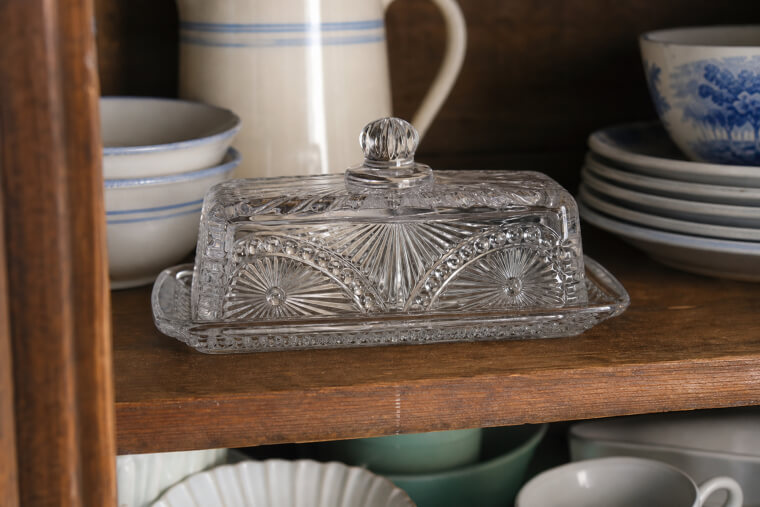
Valued at $20 to $30, it won't make you rich, but it's the thrill of discovery that hooks people. Millions were produced, meaning statistically, someone reading this right now has one. Check yours before dinner tonight. Speaking of things hiding in plain sight, the next piece proves that sometimes just an inch of difference separates ordinary from extraordinary.
Iris Crystal Dinner Plate Has A Secret
Grab a tape measure. Jeannette Glass's Iris and Herringbone dinner plate in crystal comes in two sizes that look almost identical sitting in a cabinet — but the difference between them is staggering. The 9-inch version is everywhere. You'll find it at every antique mall in America for around $12. The 11½-inch version, though, is genuinely rare and sells for $60 or more. That's five times the value for just two and a half extra inches of glass.
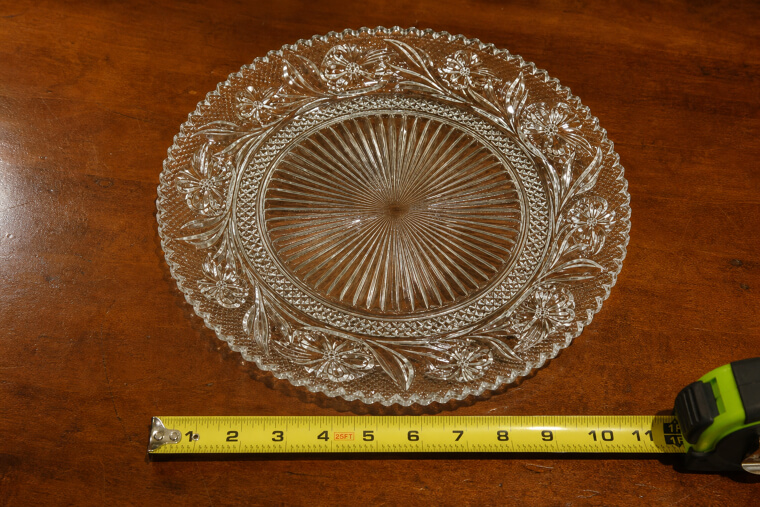
Here's what makes this wild: many families own both sizes stacked together, completely unaware that one plate in the pile is worth dramatically more than the others. Pull out every Iris plate you have and measure them — you might be sitting on a quiet little windfall. Next up, a piece that started as Depression glass and became something else entirely.
Waterford Crystal Lamp Is A Showstopper
Nobody at Hocking Glass designed these. During the 1940s, resourceful Americans took Waterford "Waffle" pattern pieces — plates, bowls, even stacked tumblers — and drilled them, wired them, and transformed them into electric table lamps. Each one is unique, a one-of-a-kind collaboration between factory and kitchen table. These folk-art hybrids now sell for $45 to $60, and collectors prize them not for perfection but for personality. Every lamp tells a story of someone who looked at a glass dish and saw something more.
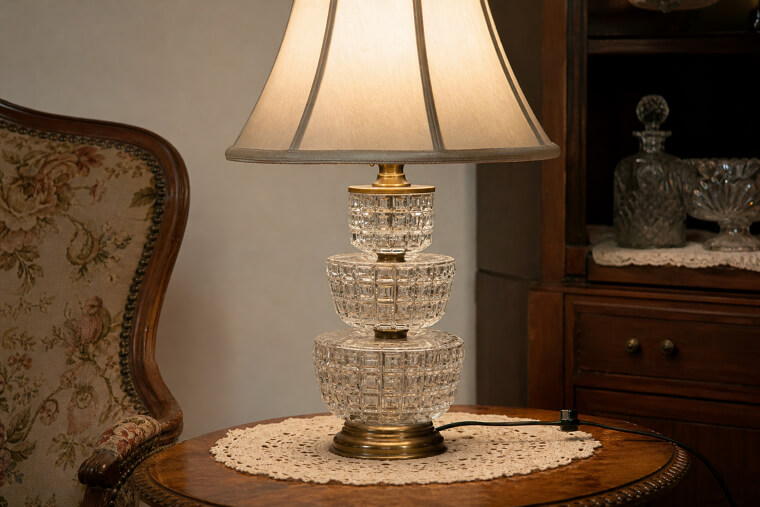
They represent a distinctly American instinct — the refusal to let beautiful things sit idle when they could be made useful. No two are exactly alike, which makes hunting for them endlessly fascinating. Up next, a pattern that moved from the kitchen to the bedroom vanity — and those pieces are even harder to find.
Floral Pink Dresser Set Commands Attention
Jeannette Glass's Floral "Poinsettia" dresser set in pink was never meant for the kitchen. The powder jar and matching cologne bottles sat on bedroom vanities — delicate, decorative, and constantly handled. That's exactly why so few survived. Kitchen plates got stacked in cupboards and forgotten. Vanity pieces got knocked off dressers, dropped on tile bathroom floors, and shattered by children playing where they shouldn't have been. A complete pink dresser set now commands over $200, but even a single cologne bottle with its original stopper brings strong money.
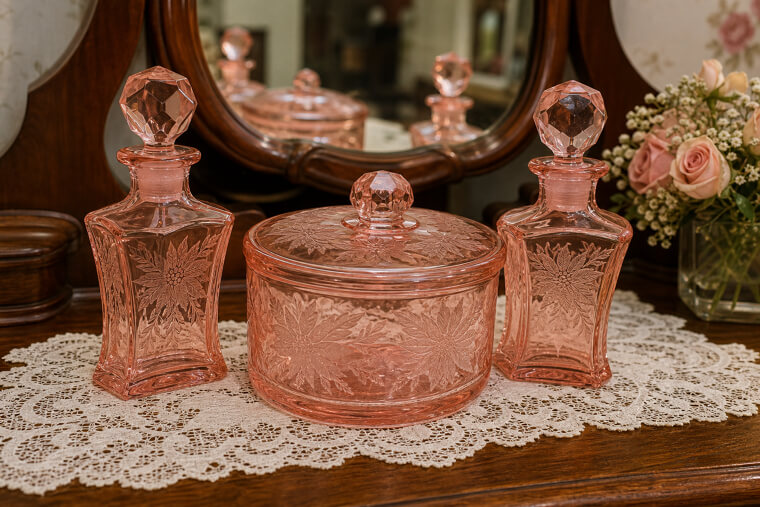
Partial sets sell surprisingly well because collectors know they may never find every piece. The survival math is brutal — these items lived in the most accident-prone spots in the house. What survived is genuinely precious. Next, a tumbler so easily misidentified that collectors walk past small fortunes without blinking.
Old Colony Pink Footed Tumbler Turns Heads
Here's insider knowledge that separates serious collectors from casual browsers. Hocking's Old Colony pattern — better known as "Lace Edge" — is celebrated for its intricate open-lace border that looks like crocheted doilies pressed into glass. But the pink footed tumbler doesn't have that lace edge at all. It's a clean, simple shape that looks nothing like the ornate plates and bowls everyone associates with the pattern.
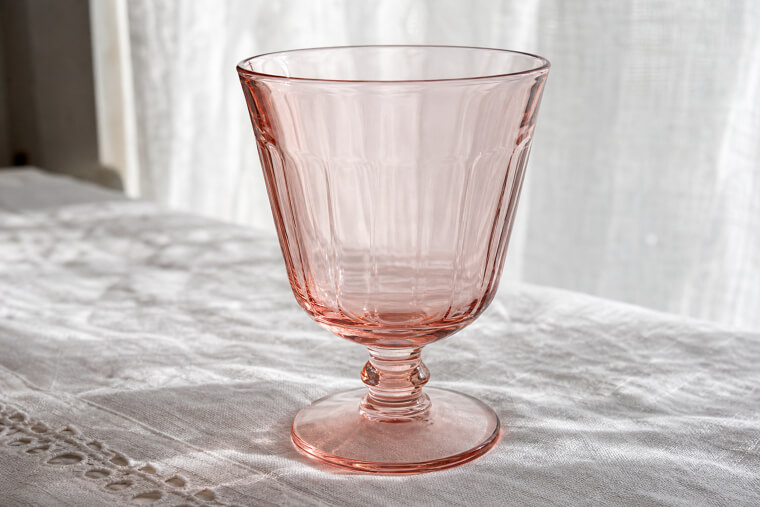
That disconnect is exactly why collectors walk right past them at estate sales. At $80 to $100 each, these tumblers are valuable precisely because they're underrecognized. If you spot pink footed tumblers marked as "unknown pattern," check the base and proportions — you might be holding Old Colony gold. Coming up, a piece that literally seems to glow from within.
Moonstone Opalescent Cloverleaf Bowl Glows
There's a reason people get quiet when they pick one up. Anchor Hocking's Moonstone cloverleaf bowl has an opalescent white hobnail rim that catches light and seems to glow softly, like something lit from inside. It's only worth $15 to $20, but try telling that to someone whose grandmother kept one on the dining room table, always filled with butterscotch candies or mixed nuts. You'd reach in as a child without thinking twice. You didn't know it was Depression glass. You just knew it was Grandma's.
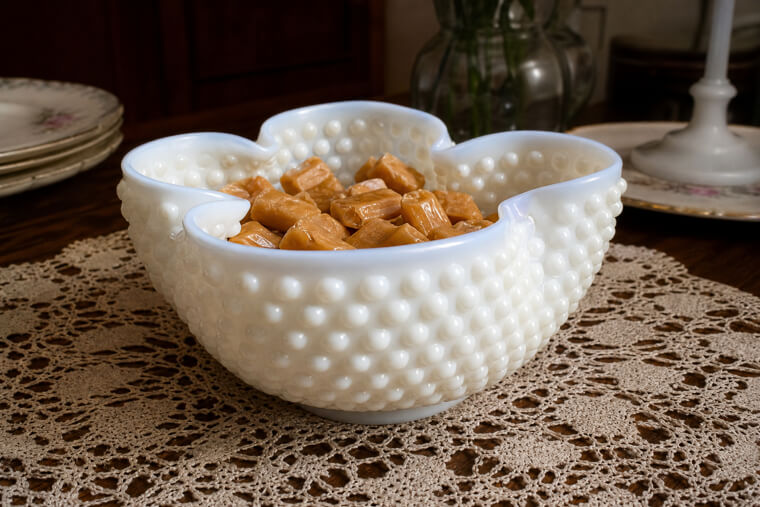
That warm, milky glow is unmistakable — once you've seen Moonstone, you never forget it. These bowls carry memories that no price guide can quantify, which is exactly why collectors hold onto them long after assembling far more valuable sets. Next, a cookie jar so historically significant it's earned a place in actual museum collections.
Sandwich Crystal Cookie Jar Is Museum-Worthy
Indiana Glass Company's Sandwich pattern crystal cookie jar isn't just beautiful — it's genuinely historically significant. The pattern reproduces an early American pressed glass design that predates the Depression era by decades, creating an affordable echo of much older glassmaking traditions. That layered history is why these jars have appeared in museum collections documenting American domestic life, sitting in the same display cases as hand-blown pieces worth thousands more.
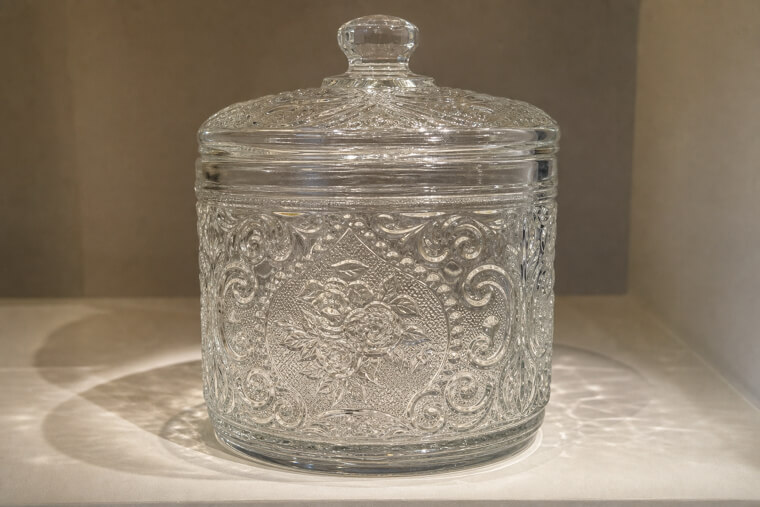
At $40 to $50, your pantry cookie jar carries the same cultural weight as a curated museum artifact. It's a mass-produced object that tells the story of how American families preserved beauty and tradition through economic collapse. Speaking of preservation — the next piece is a stunning Art Deco decanter that flea market sellers consistently underprice.
Ring Green Decanter With Stopper Dazzles
If you love the thrill of the hunt, this is your piece. Hocking's Ring "Banded Rings" decanter in green features bold concentric horizontal rings that scream Art Deco elegance. With its original stopper intact, it sells for $40 to $60 among informed collectors. But here's the opportunity: flea market vendors routinely price these at $5 to $10 because the pattern isn't as widely recognized as Royal Lace or Miss America.
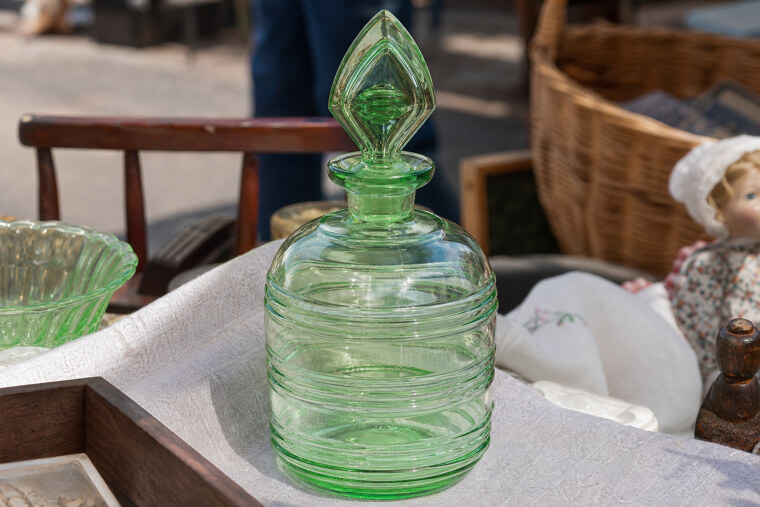
Look for evenly spaced colored bands circling a tall, slender green body with a matching pointed stopper. The stopper is key — without it, the value drops significantly. Check flea markets, church rummage sales, and thrift stores where decorative glass gets lumped together without research. This is one of the best bargain-hunting opportunities in Depression glass right now. Up next, a green pitcher so rare that finding one feels like winning the collector's lottery.
No. 612 Green Pitcher Is Horseshoe Gold
Most Depression glass patterns had years to saturate American kitchens. Indiana Glass's No. 612 "Horseshoe" didn't get that chance. The entire pattern was discontinued quickly, but the footed pitcher in green had an even shorter window — a production run so brief that most collectors will never see one in person. That scarcity pushes authenticated examples past $300, making this one of the most valuable pitchers in the entire Depression glass universe.
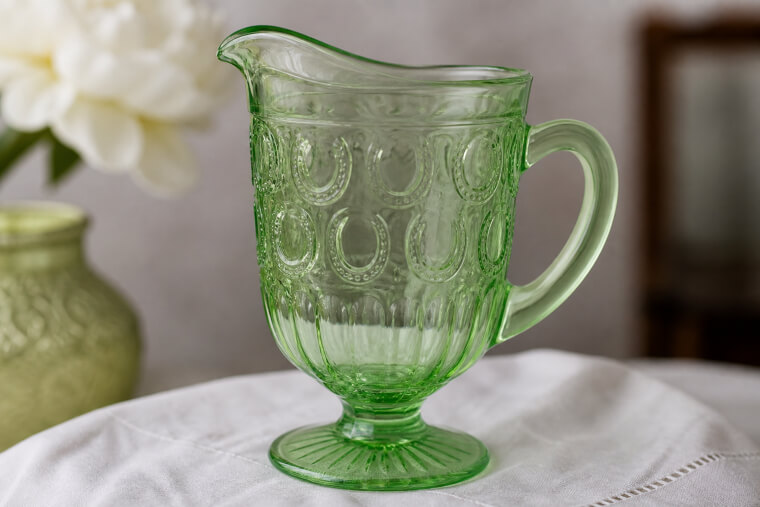
What makes estate sale hunters lose sleep is knowing these pitchers exist somewhere, sitting unrecognized on dusty shelves. The horseshoe motif in the glass is subtle enough that casual sellers miss it entirely. When one surfaces, word travels fast through collector networks. But sometimes the quiet collector gets there first, and walks away with a piece most enthusiasts only dream about owning.
Aunt Polly Blue Vase Is Quietly Soaring
Seasoned collectors know something the general market hasn't fully caught on to yet: U.S. Glass Company's Aunt Polly pattern in blue is seriously undervalued. The 6½-inch vase, with its elegant diamond and panel design, has quietly climbed to $50-$60 as available examples disappear into permanent collections. What's driving the surge isn't just scarcity — it's interior decorators. Farmhouse-style kitchens and vintage-staged homes have created fresh demand for blue Depression glass, and Aunt Polly's soft blue tone
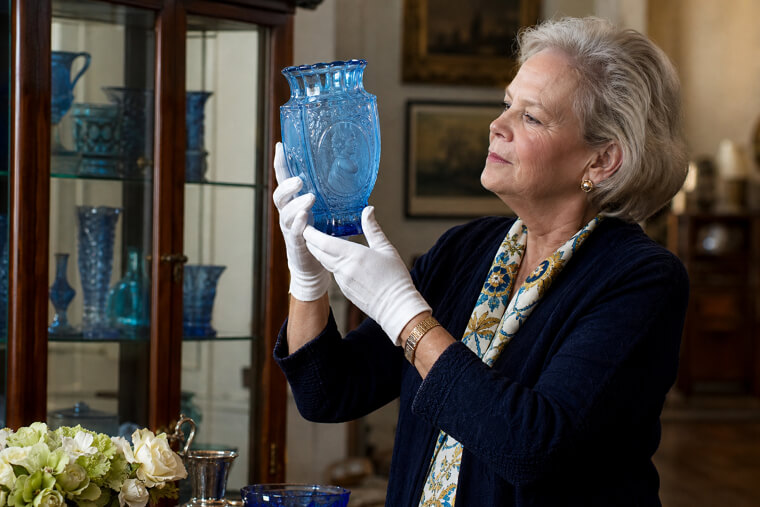
photographs beautifully, making it a favorite for styled shoots and social media. Smart collectors are buying now before decorator demand pushes prices higher. The entire Aunt Polly blue line deserves a closer look while pieces remain findable. Next up, a tiny tumbler that captures one of America's most dramatic historical moments in glass.
Roulette Green Whiskey Tumbler Tells A Story
December 5, 1933 — Prohibition officially ended, and Americans could legally raise a glass again. Hocking Glass Company's Roulette pattern green whiskey tumbler was there for the occasion. These tiny 1½-ounce glasses rolled off production lines just as the nation collectively exhaled, making them more than collectible glassware. They're artifacts of a cultural turning point, small enough to fit in your palm yet enormous in what they represent.
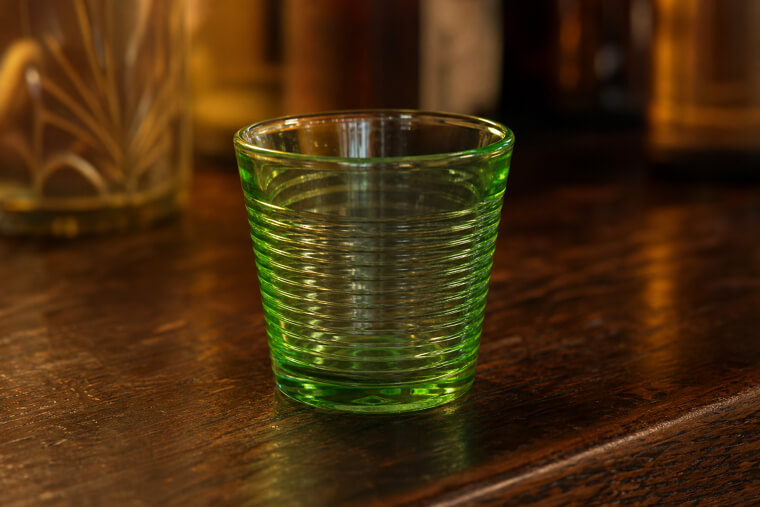
At $25 to $30 each, these tumblers are remarkably accessible for something carrying that much historical weight. Imagine the first legal toast poured into one — the relief, the celebration, the defiance. Few Depression glass pieces connect so directly to a specific moment in American history. Speaking of pieces that surprise, wait until you see what a bold pink butter dish is doing at auction.
Sierra Pink Butter Dish Surprises At Auction
If you're looking for your first serious Depression glass purchase, Jeannette Glass Company's Sierra "Pinwheel" butter dish in pink is hard to beat. Its bold geometric design — sharp angular lines radiating outward like an Art Deco sunburst — looks like something you'd find in a contemporary design shop, not a 1930s kitchen. At $70 to $90, it's genuinely affordable as collectibles go, and unlike many pieces that live behind cabinet glass, this one begs to be used.
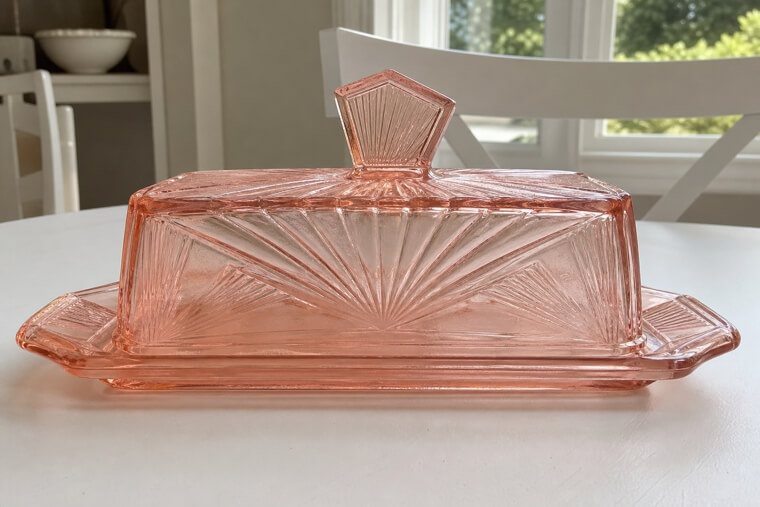
Put it on your dinner table and watch guests reach for it, drawn by a design that feels utterly modern. Check estate sales, online auctions, and antique malls — sellers sometimes list Sierra pieces under "Pinwheel," so search both names. It's a functional entry point into collecting that earns its place in daily life. Up next, a miniature tea set that carries the weight of generations.
Grandmother's Cherry Blossom Child's Tea Set
There's something about holding a tiny Delphite blue cup, no bigger than a walnut, that can make a grown woman's eyes fill with tears. Jeannette Glass Company's Cherry Blossom child's tea set was made for little hands — fourteen miniature pieces including cups, saucers, plates, a sugar, creamer, and teapot, all bearing the same delicate floral pattern as the adult pieces. In Delphite blue, a complete set now brings over $300. But the real value lives in memory.
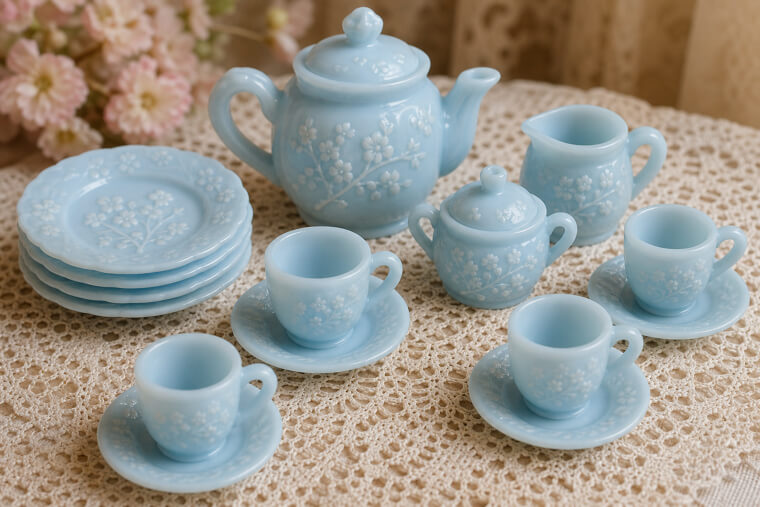
Countless women describe the same scene: grandmother's kitchen, a small table, pretend tea poured with absolute seriousness. These sets taught grace during graceless times, turning scarcity into ceremony. Many were wrapped in tissue paper and passed down like heirlooms far more expensive than they ever cost. Some things simply cannot be appraised. Speaking of pieces that carry deep feeling — wait until you see what a glowing red punch bowl means to families every December.
Royal Ruby Punch Bowl Set Steals Christmas
Every December, the same ritual plays out in thousands of homes: a deep red punch bowl emerges from its careful wrapping, and suddenly it's Christmas. Anchor Hocking's Royal Ruby punch bowl set — that impossibly rich, glowing crimson glass — became the centerpiece of holiday gatherings across America for decades. Complete sets with twelve cups sell for $100 to $150, but families who own them rarely consider selling. The bowl holds more than punch. It holds every Christmas Eve it ever presided over, every grandmother who ladled from it, every child who sneaked a second cup.
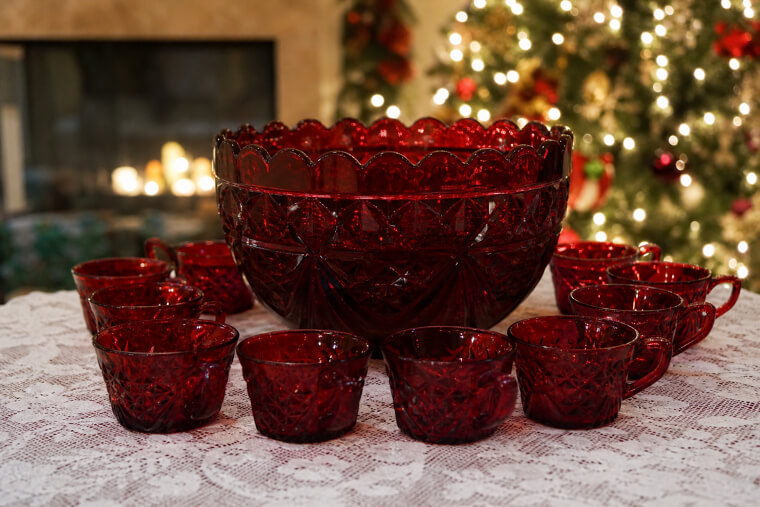
Setting one out each year is an act of remembrance disguised as party preparation. Some traditions don't need explanation — they just need that unmistakable red glow on the table. Our final piece asks the biggest question of all: what's really sitting in your grandmother's cabinet right now?
Your Grandmother's Pieces Could Be Priceless
The Cube pattern sugar bowl and creamer set in pink by Jeannette Glass sits in countless cabinets right now, valued at a modest $30 to $40. But pick one up. Feel its weight. Those geometric facets caught kitchen light during the hardest years America ever faced, and your grandmother chose it anyway — chose beauty when bread was uncertain. She spooned sugar for her family from something that sparkled because she refused to let hard times strip life of its grace.
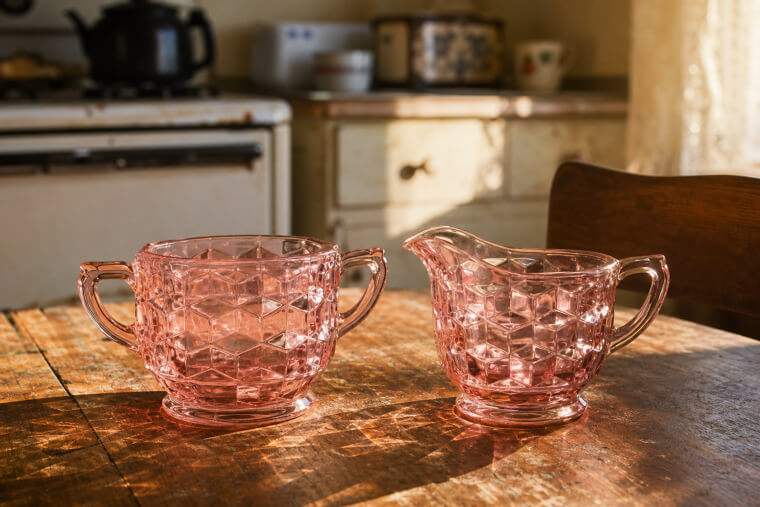
That quiet defiance lives in every piece of Depression glass you've seen across these pages. The dollar amounts matter, sure. But the real treasure is what these pieces prove: that even when everything was falling apart, someone in your family reached for something beautiful. Check your cabinets. Call your family. The priceless thing might already be yours.Disclaimer: This story is based on real events. However, some names, identifying details, timelines, and circumstances have been adjusted to protect the privacy of the individuals involved. The images in this article were created with AI and are illustrative only. They may include altered or fictionalized visual details for privacy and storytelling purposes